
What the Hands of Lahat Carry
A potter working clay found only near her village, and a weaver who puts Lahat's landmark mountain into silk, in a coal regency where the power still fails.
Under a workshed in Desa Kebur, Lahat, South Sumatra, 38-year-old Ibu Lidya Fitriani shapes a small clay pot with her bare hands. Using only clay and water-slicked fingers, she deftly kneads and pinches the soft earth, coaxing it into the form she desires.
Rough and small enough to rest in her palm, the earthenware carries more than its modest size suggests. It bears the imprint of Ibu Lidya’s hands, the knowledge of the women before her, and traditions beyond her own that depend upon the pot’s continued existence.
Pottery-making has been practised in Ibu Lidya’s family for generations. “Desa Kebur was once a pottery hub,” she shares. Almost every household produced it, because almost every kitchen depended on it. Cooking pots, plates and water vessels were shaped from the earth beneath the village.
The advent of modern household products precipitated the gradual decline of the craft. As earthenware disappeared from kitchens, so did the number of people who knew how to make it. Today, Ibu Lidya’s mother and aunt are among the few remaining skilled pottery-makers in her family.
Yet the craft endures, in part because other traditions still call for it.
One is the Indonesian custom of burying the placenta of a newborn. The placenta is cleaned and placed in a special earthenware vessel, or kendi ari-ari, before being buried by the family. In parts of Muara Enim, another custom calls for a clay vessel to be placed on the roof of a newly constructed home. An order for hundreds of these vessels can keep Ibu Lydia and the women working for weeks.
This tradition keeps others alive. Families rely upon Ibu Lidya’s pots to continue customs passed down through generations. Those customs, in turn, sustain the women whose hands still remember how to transform soil into vessels.
The pots begin with a locally sourced clay known as tanah periuk, found, according to Ibu Lydia, only in a particular area near Desa Kebur.
“Unlike conventional clay, which leaves visible holes, the ground naturally closes again after the soil is extracted,” she explains.
The terrain is difficult to reach, however, and the women must hire others to retrieve the soil. The collective has also obtained yellow clay from a closed mining area, with permission, to mix with the tanah periuk. In a regency shaped by coal extraction, the material gestures towards a different possibility: that the mining-ravaged land of Lahat may sustain livelihoods beyond coal, if the knowledge already rooted there is recognised and supported.
A Landscape Woven into Silk
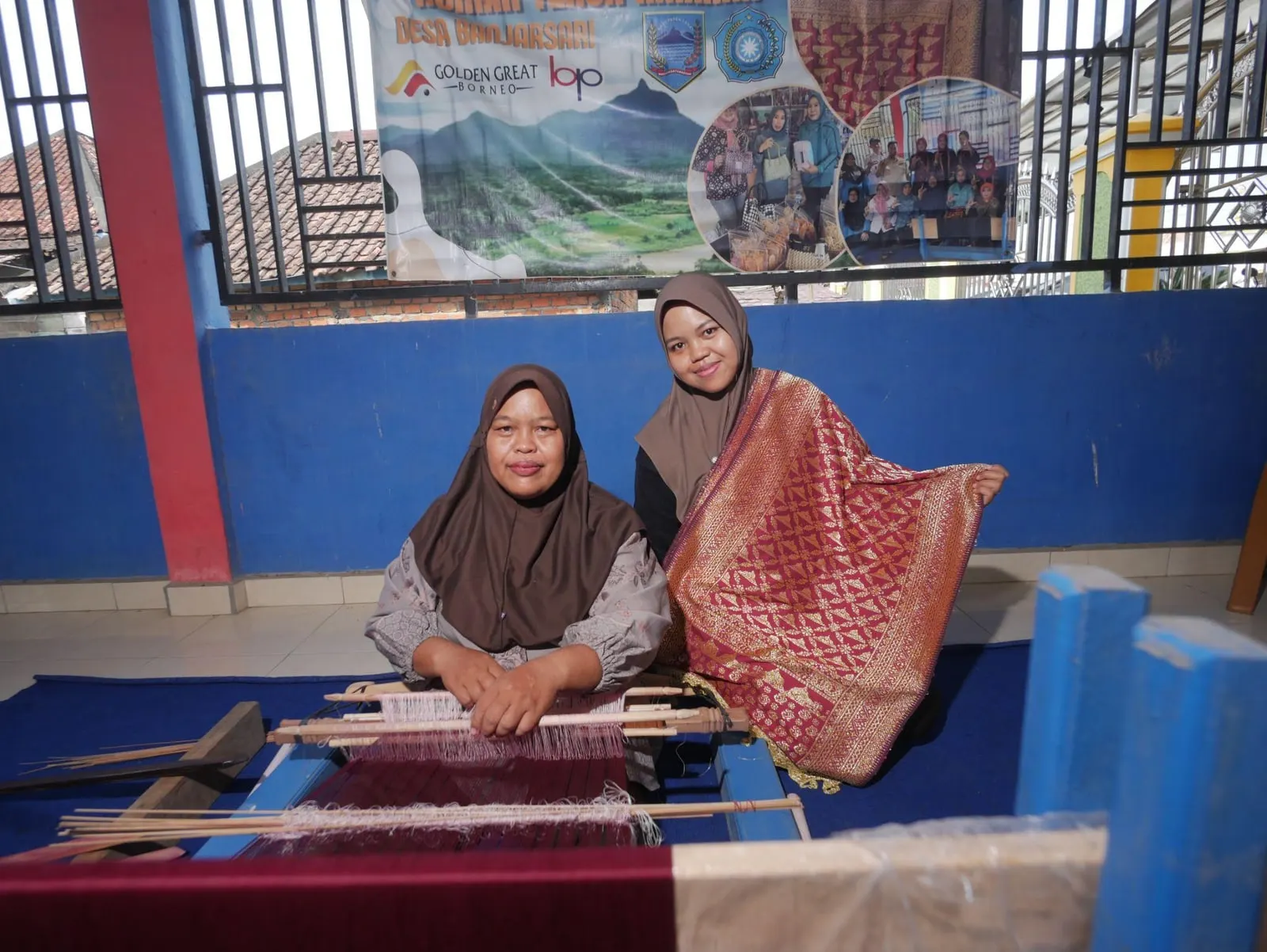
Elsewhere in Lahat, Ibu Rozita weaves with studious focus. She sits on the ground, her feet resting against the handloom. Above her outstretched legs, silk threads converge into an intricate motif found nowhere else.
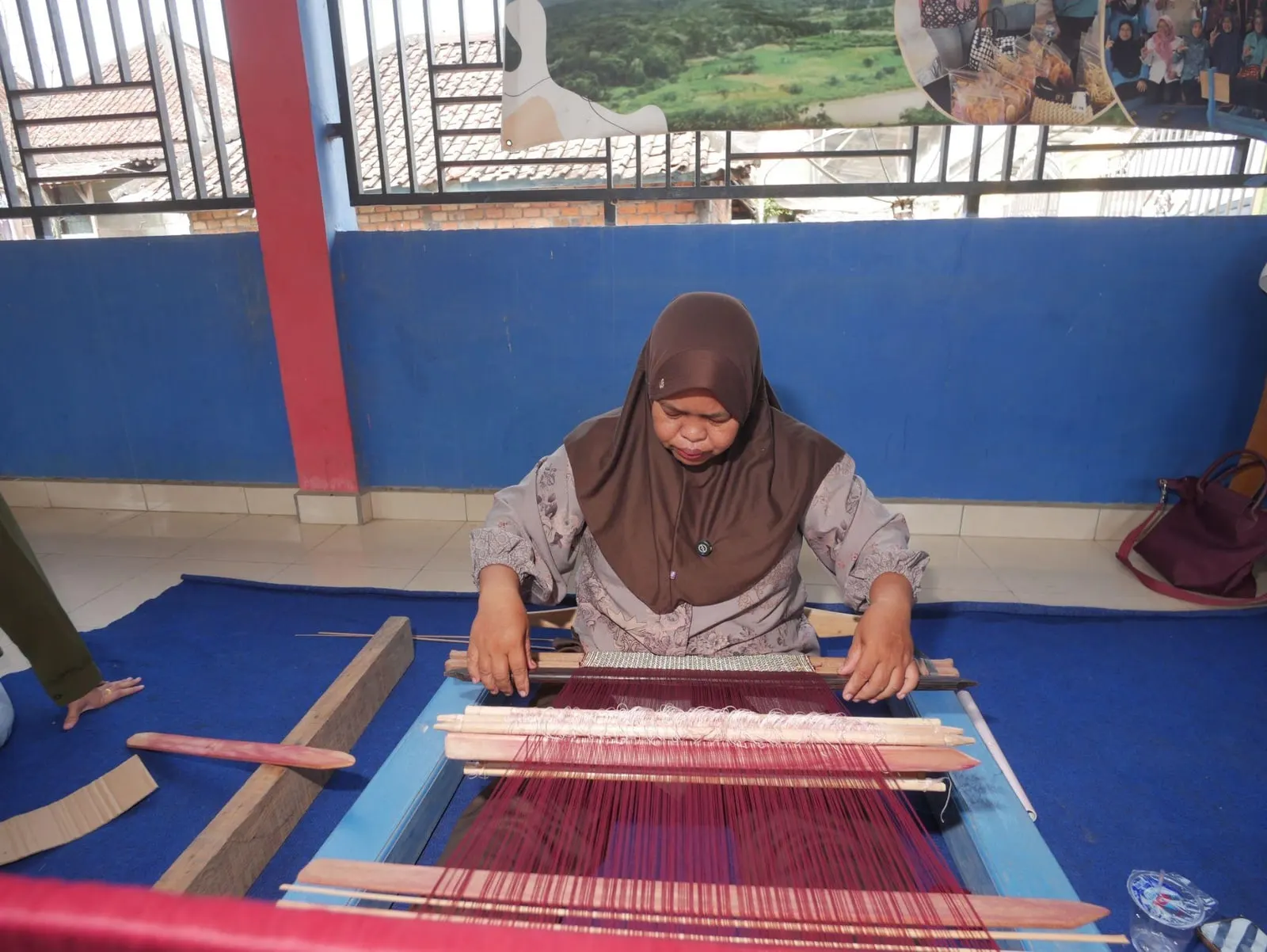
The design traces the distinctive, thumb-shaped summit of Bukit Serelo, an iconic landmark in Lahat. Through Ibu Rozita’s hands, the contours of the surrounding landscape are translated into silk.
A single kebaya songket ensemble can take approximately 200 hours to complete. The result, a woven skirt and shawl paired with a lace kebaya top, is resplendent. Every line in the fabric is deliberate; every motif emerges through the patient accumulation of hundreds of small, exacting movements.
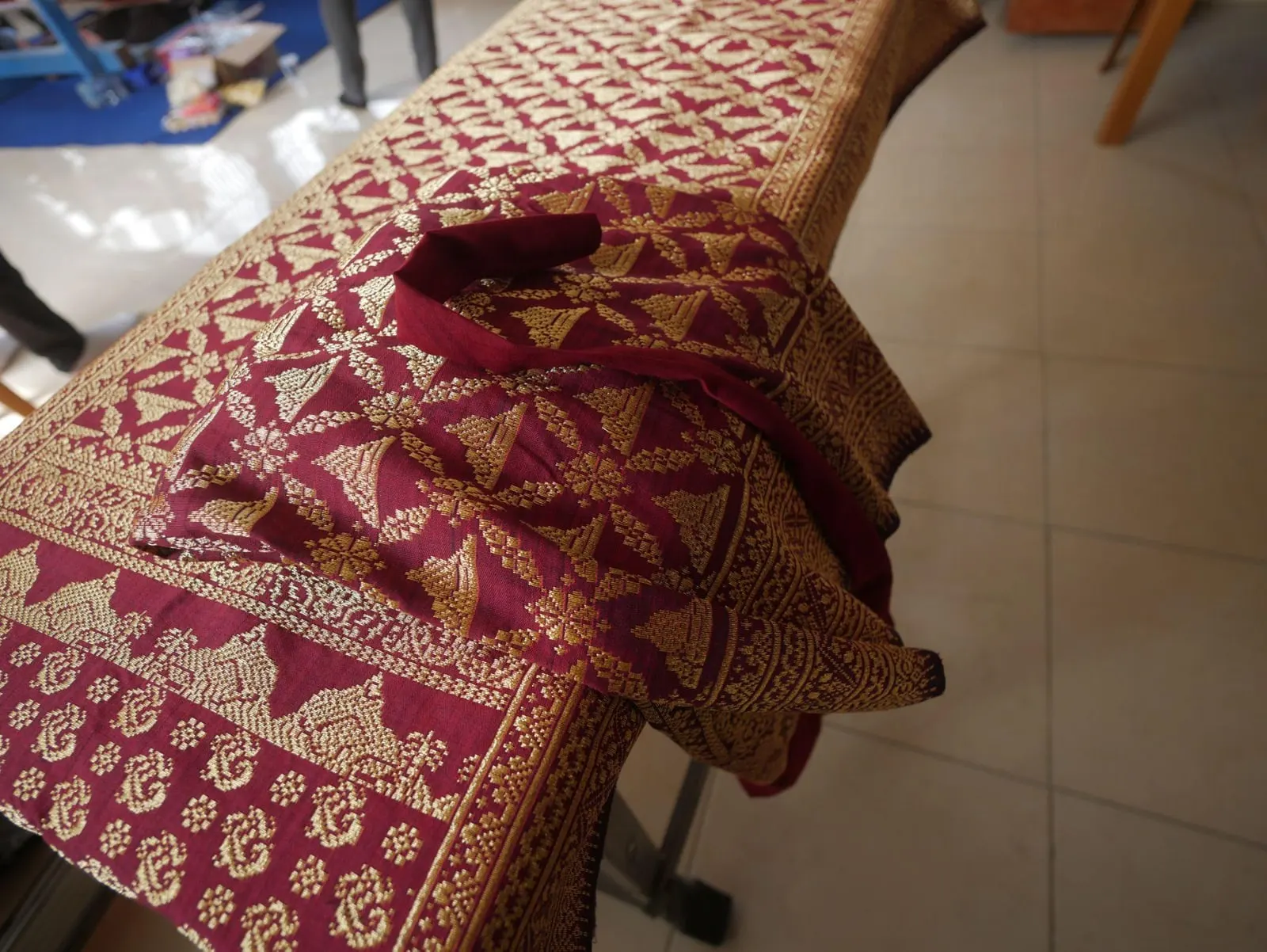
The scale of the work can be considerable. Ibu Rozita divides large orders with a friend, each taking responsibility for part of the long weaving process. Recently, they produced 200 songket sets for members of the Family Welfare and Empowerment organisation under its Family Income Development Programme.
But this painstaking work unfolds against a profound contradiction.
The very Bukit Serelo that is featured in her weaves faces threats of distant encroachment of coal mining activities. Lahat is known as a coal-producing regency, yet residents continue to contend with unreliable electricity. Ibu Rozita says blackouts occur approximately four times a week and can stretch from seven in the morning until four in the afternoon. Schools are disrupted. Businesses lose productive hours. For artisans whose work already demands extraordinary time and concentration, the instability imposes yet another constraint.
The handloom itself may not be powered by electricity, but the livelihood surrounding it does not exist apart from the energy system. For schools and businesses alike, adequate lighting, administration and the ordinary rhythms of running a household and enterprise are all made more difficult when electricity disappears for most of the working day.
Coal leaves Lahat to power development elsewhere. Yet people living amid its extraction still bear the inconvenience of unreliable access.
This is one of the central injustices that an energy transition must confront. Energy is not just a commodity measured in tonnes of coal or megawatts generated. It is tested on whether a child can continue a lesson, whether a business can complete an order, and whether an artisan can work without losing hours to darkness.
Shaping and Weaving a Just Transition
A just transition, like Ibu Lidya’s clay, will not assume a fair form on its own. It must be worked deliberately: pressed, turned and shaped by many hands while it is still malleable.
The decisions being made now about energy, investment, land and employment will eventually harden into institutions and economies that may endure for generations. If communities are excluded while those choices are still being formed, the resulting transition may be difficult to reshape once it has set.
The question, therefore, is not only what will replace coal. It is who will have a hand in shaping what comes next.
For coal-producing communities, transition can too easily remain an abstract promise. Renewable-energy infrastructure may arrive while women, informal workers and small producers remain at the margins. Traditional knowledge may disappear, not because it has lost its value, but because the people who carry it lack reliable electricity, capital and access to markets.
Ibu Lidya and Ibu Rozita offer another vantage point from which to understand just transition. Their enterprises are modest in scale, but not in significance. They are women-led livelihoods rooted in place, culture and inherited knowledge, sustaining families and circulating income within their communities.
With thoughtful institutional support, these crafts could also anchor cultural tourism: visitors learning pottery in Desa Kebur, meeting songket weavers, and encountering the landscapes and customs held within their work. Such experiences would offer Lahat another avenue for economic diversification while keeping tourism income closer to the communities that sustain its living heritage.
Like Ibu Rozita’s songket, however, a just transition cannot be woven from a single thread. Renewable technology may provide part of its structure, but reliable energy access, dignified livelihoods, gender justice, cultural continuity and meaningful community participation must be interlaced with it. Remove one thread and the fabric weakens. Exclude enough of them and the pattern ceases to hold.
Through the IKI-JET project, Yayasan Mitra Hijau brought Ibu Lidya, Ibu Rozita and other women entrepreneurs into Forum Perempuan Energi Berkeadilan Sumatera Selatan (FORBESS), a women’s collective of entrepreneurs working towards Just Energy Transition. There, they are provided workshops on women empowerment, digital marketing, product development and related business skills. The project did not teach them how to mould clay or weave silk. That knowledge was inherited through years of observation, practice and discipline. Instead, it helped them consider how their knowledge could travel further and remain economically viable.
Before the training, Ibu Lidya and the eight-woman Gerabah Tunas Harapan collective sold primarily within Lahat, Muara Enim and Tanjung Enim. Their market depended upon nearby shops and customers who already knew where to find them. Selling beyond South Sumatra seemed daunting. The pottery was fragile, and Ibu Lidya did not know how it could be packaged and transported safely over long distances.
She also saw how value accumulated after a pot left its maker’s hands. Earthenware bought cheaply from the women could be resold elsewhere at several times the original price. The knowledge and labour remained in Desa Kebur, but much of the economic value travelled elsewhere.
The workshops helped Ibu Lidya imagine a more direct route between maker and customer. She is now considering selling through e-commerce platforms, developing safer and more attractive packaging, and producing labels and instruction cards explaining the uses and cultural significance of each vessel.
My mindset has opened. Now I can see where we need to go next.
Indeed, Ibu Lidya speaks with fond appreciation for the network of women entrepreneurs she met through FORBESS, each with their own expertise they can learn from and collaborate with.
The collective is also experimenting with drinking vessels, aromatherapy containers and other contemporary products. Like clay turning between her palms, Ibu Lidya is gently working tradition into new forms.
For Ibu Rozita, digital marketing offers similar potential. The value of her songket lies not only in the finished garment, but in the 200 hours of labour it embodies, the rarity of its motif and its intimate connection to Lahat’s landscape. Reaching customers who understand that provenance could help distinguish her work from mass-produced textiles and allow its makers to retain more of the value they create.
Yet training is only one thread in the larger fabric these women need. Digital markets require reliable electricity and connectivity. Enterprise development requires finance, infrastructure and access to customers. Cultural continuity requires younger people to believe that inherited knowledge can still support a dignified life.
Without these other threads, skills training alone cannot complete the pattern.
Not Relics, but Routes to the Future
The younger generation has shown little interest in learning pottery-making. Ibu Lidya worries that her family may be the last to continue the tradition.
As part of Gerabah Desa Kebur, she hopes pottery-making can be introduced in schools so that children can learn the craft and understand the cultural practices embedded within it. If demand grows and the work becomes more economically secure, more women and young people may come to see pottery not as a relic of the past, but as a livelihood with a future.
Preserving tradition does not mean consigning women to inherited roles or demanding that culture remain unchanged. Ibu Lidya and Ibu Rozita are already changing it. They divide large orders, develop new products, explore digital markets and consider how techniques inherited from previous generations might answer contemporary needs.
One woman shapes the earth beneath Lahat. Another weaves its most recognisable mountain into silk. Through their hands, the landscape becomes a living archive in vessel, garment and livelihood.
Their work asks a question that lies at the heart of just transition: when an economy changes, what, and whom will it carry with it?
If the transition is truly just, it cannot permit the knowledge held by women like Ibu Lidya and Ibu Rozita to quietly disappear. It must ensure that the communities which have lived alongside extraction are not merely compensated for what is ending, but supported to build what comes next.
Under the workshed, a clay pot slowly takes shape. At the loom, Bukit Jempol emerges one silk thread at a time. Neither woman is simply preserving the past. Both are already making the future, if the transition makes room for them within it.
More stories
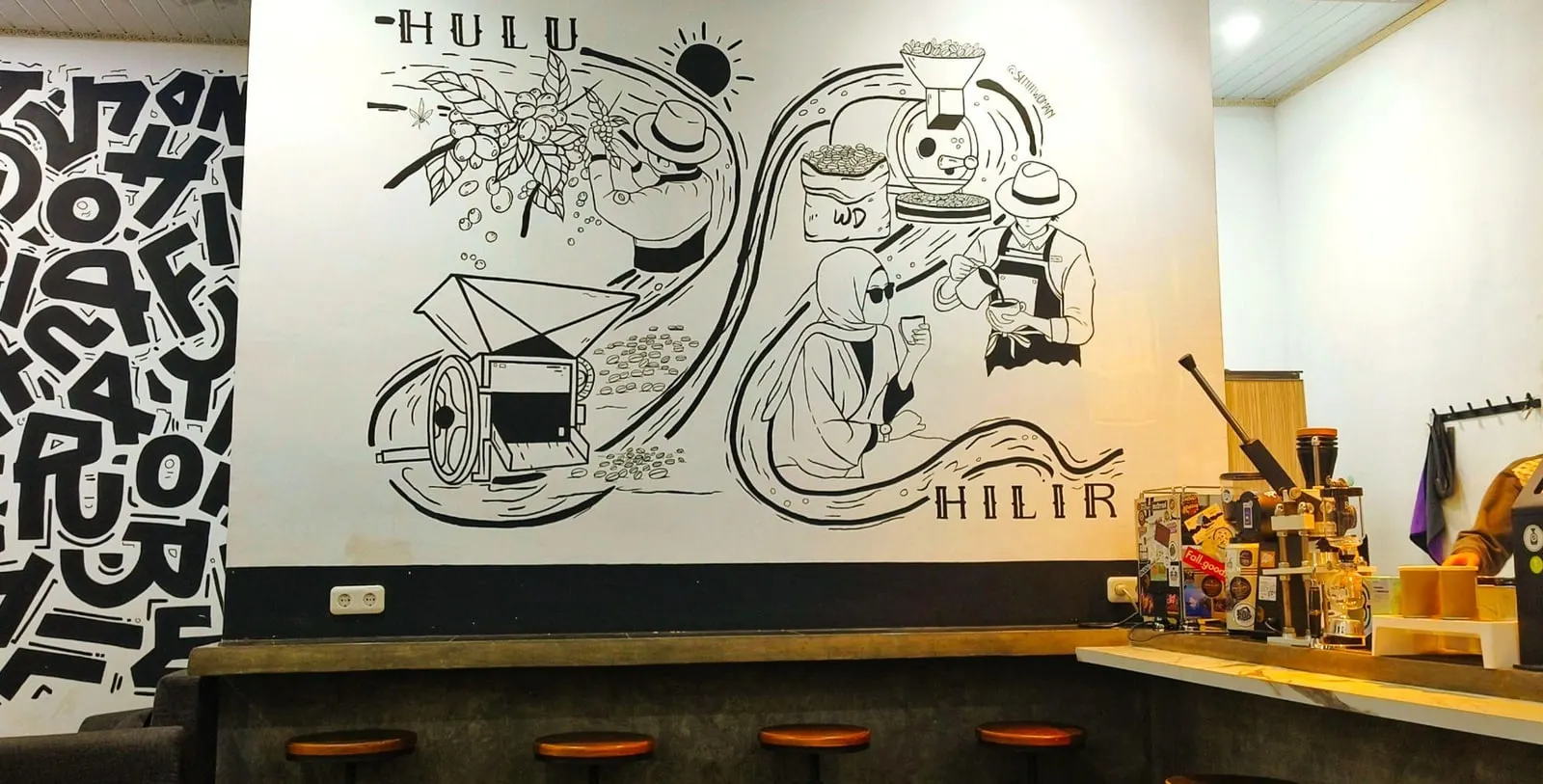
The Long Harvest: Growing a Sustainable Future Beyond Coal in Muara Enim
Robby Anugrah Putra is building a specialty coffee industry in Muara Enim, so that a district shaped by coal has something lasting to grow instead.
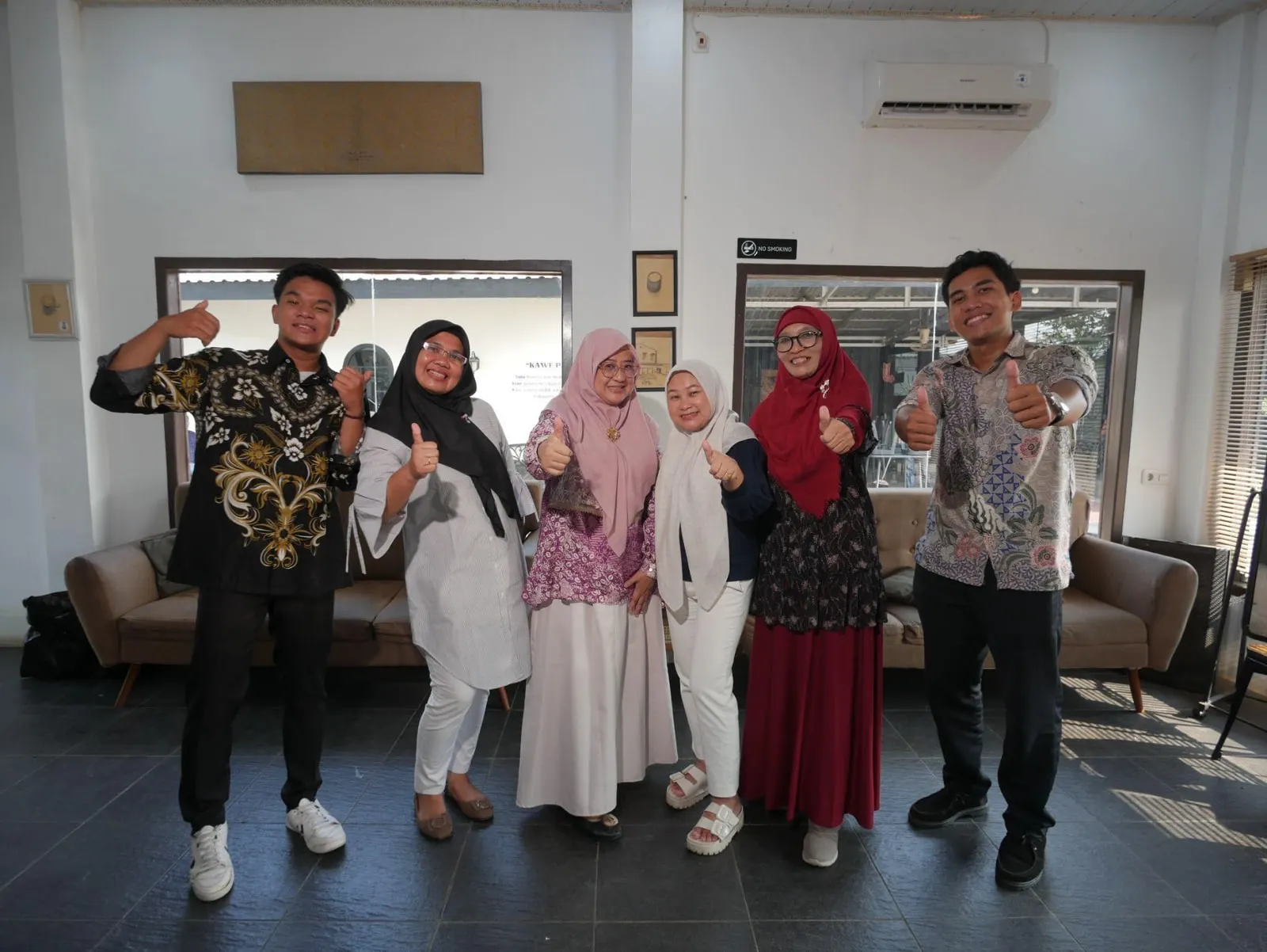
The Door They Opened: The Women Behind YMH’s Just Transition in South Sumatra
A professor, a lawyer and a former teacher ran IKI-JET’s work in South Sumatra. They had six months. Prof. Erna reckons it takes about that long simply to become known in a village.