
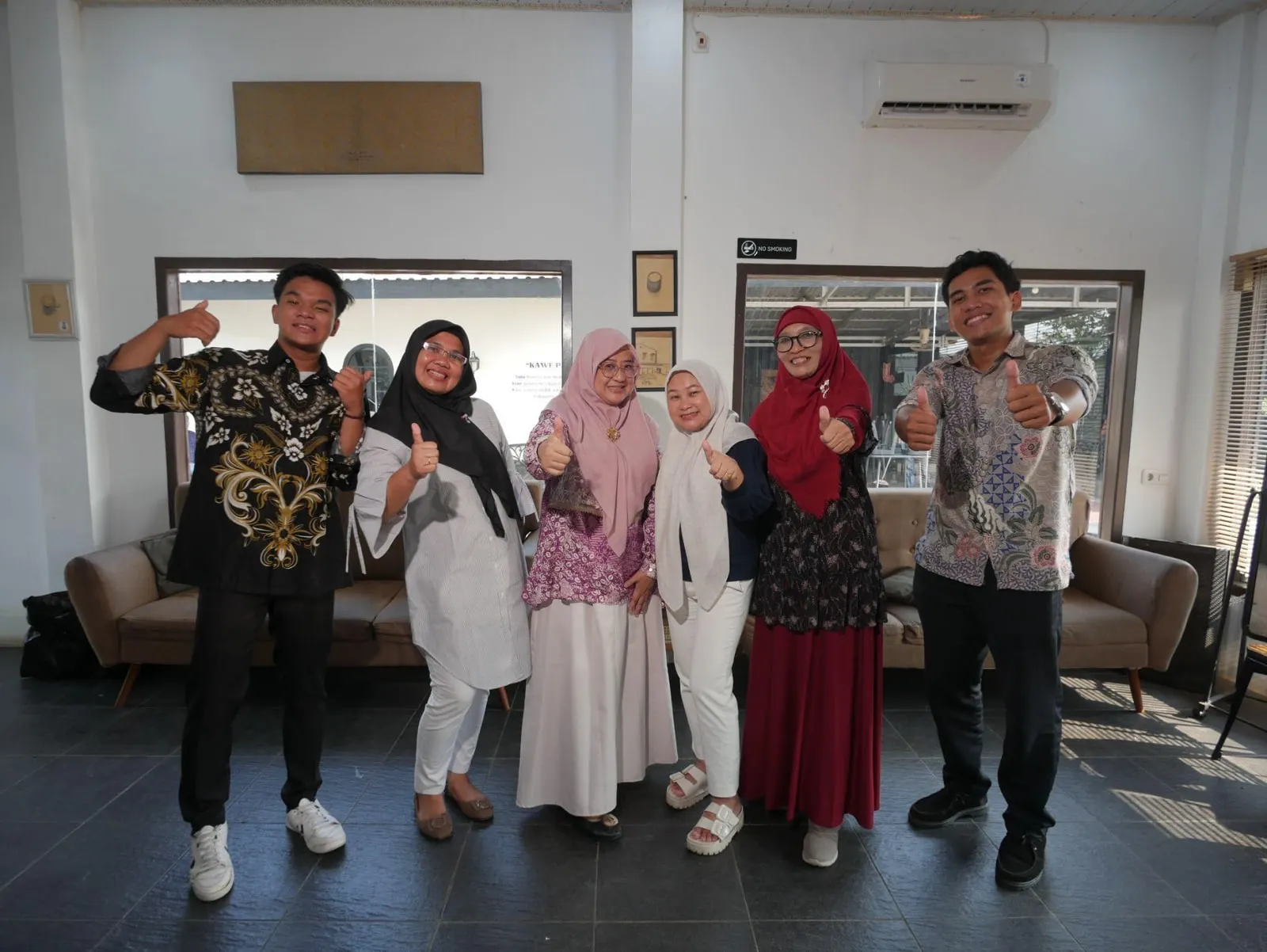
The Door They Opened: The Women Behind YMH’s Just Transition in South Sumatra
A professor, a lawyer and a former teacher ran IKI-JET’s work in South Sumatra. They had six months. Prof. Erna reckons it takes about that long simply to become known in a village.
Projects have end dates. Mines do too, although they are often spoken of as though they do not.
In South Sumatra, where coal has entered the economy, the roads and the architecture of everyday life, the IKI-JET project is drawing to a close. There are final meetings to attend. Reports to complete. Outcomes to count.
Yet, in the middle of a conversation about what happens next, the three women behind the project’s work in South Sumatra keep dissolving into laughter.
Ir. Erna Yuliwati teases Dwi Annisyah. Dwi returns the joke. Ressy Tri Mulyani attempts to restore order and is promptly swept into the next round of mischief.
It is easy to dismiss laughter as the part that does not belong in a project report. But it reveals something that the columns and indicators cannot: these women have come to trust one another.
And trust, in this story, is not decoration. It is the infrastructure.
A transition may be announced through targets, policies and quantities of renewable electricity. It may arrive dressed in the authoritative language of roadmaps, megawatts and net zero. But if the people whose lives are being rearranged do not trust those carrying it, the transition remains an announcement.
In South Sumatra, part of the work began with three women entering communities with different forms of knowledge, and allowing the work to alter them in return.
Three Ways of Entering a Room
At 57, Ir. Erna Yuliwati, or Prof. Erna as she is fondly called, is a lecturer at Universitas Muhammadiyah Palembang. Her technical background is in chemical technology, with research interests in water treatment and energy derived from biomass.
But much of what she knows about change was learned outside laboratories.
She began working with women’s groups in 2000. Over the years, environmental, sanitation and infrastructure programmes brought her into communities where women were organising livelihoods, managing waste and solving problems that official systems had not solved for them.
Some of those projects ended long ago. Prof. Erna stayed.
She continues to advise waste-bank groups she first encountered through earlier programmes. She has connected them with lecturers from several universities and helped turn their workspaces into places of learning. Women who were once trained to manage waste are now teaching others how to begin.
For Prof. Erna, this is how accompaniment should evolve. First, people learn to do. Then they learn to teach. Eventually, the mentor moves to the background. Not absent, but no longer occupying the centre.
This long memory of projects that ended, and relationships that did not, is what she brought when Yayasan Mitra Hijau invited her to help facilitate the South Sumatra Women’s Forum for Just Energy, or FORBESS.
Ressy entered from another direction.
A Master of Law, she has worked on gender equality, disability inclusion, safeguarding and advocacy. She began volunteering with a women’s organisation in 2005, helping establish women’s groups and strengthen their capacity. From 2015, her work expanded to include persons with disabilities and other marginalised communities.
She joined YMH as field coordinator in December 2025.
A woman’s presence at a meeting does not necessarily mean she has power in the room. An invitation is not the same as participation. Participation is not the same as influence. And none of these automatically becomes justice.
Dwi joined the following month.
She was honest in her interview: she knew nothing about just energy transition or gender equality, diversity and social inclusion (GEDSI).
What she possessed instead was an instinct for people. Drawing partly on her experience as a teacher, Dwi had learned to look behind behaviour before judging it.
“There must be a reason why someone behaves that way,” she says.
It is a modest principle, but a useful one when entering communities that have been approached before, promised things before and photographed before. Communities where coal is both a source of harm and one of the few available sources of work. Communities where resignation can easily be mistaken for consent.
Prof. Erna brought experience and networks. Ressy brought feminist and GEDSI practice. Dwi brought curiosity and an ability to approach people without first deciding who they were.
Together, they became the human machinery behind the project.
When the Project Changed Course
The work in South Sumatra did not proceed exactly as first imagined.
Its early emphasis was on youth forums. When these did not create the space or momentum expected, the team reconsidered its approach. Ressy says they saw that women’s groups possessed enormous potential, and that this potential was not being given sufficient room.
YMH brought in Prof. Erna, and FORBESS began to take shape.
This change of direction matters.
Projects often arrive in communities with their structures already hardened: activities fixed, indicators selected, beneficiaries named. Reality is expected to fit the framework.
Here, the framework had to bend.
A GEDSI-responsive approach cannot simply count women once they enter a room. It must ask who speaks, who decides, who bears the consequences and whose knowledge is treated as legitimate. It must also be willing to recognise when its own design has failed to make enough space.
Mining and energy are still widely treated as masculine subjects. Men are imagined as workers, engineers, company representatives and decision-makers. Women enter the story later, usually as dependants or beneficiaries.
But Ressy had seen what happened when mining income disappeared. Women who had been described as supplementing household earnings suddenly became responsible for feeding their families and keeping the household economy alive.
They were already carrying the consequences of economic transition. What remained was for them to claim their place in deciding its direction.
Ressy is clear that this work was unfinished.
“Six months is very short,” she says.
There had not been enough time to build the depth of critical awareness she wanted: an understanding not only that women could start businesses, but that they had the right to participate in decisions about mining, energy, land and the economic future of their communities.
Her method was intensely personal.
When I go into the field, I give my whole heart. Not only my experience, but my heart, soul and body.
She and Dwi did not want merely to assemble women for activities. They wanted to listen, educate and build commitment. They wanted women to encounter one another as people with knowledge, responsibilities and political agency, not simply as recipients of training.
This is slower work. It cannot always be photographed. It does not fit neatly into a half-day agenda.
But without it, empowerment risks becoming another word printed on a banner.
Trust Is Not a Workshop
Prof. Erna says that when she begins working with a new women’s group, she may need at least six months simply to become known.
She sits with the women. Returns. Joins community and religious activities. Returns again. Sometimes she meets them several times a week.
Only after trust has been built do people begin to listen differently.
In South Sumatra, years of organising through networks such as IPEMI and ‘Aisyiyah meant that many women already knew her or recognised the communities to which she belonged. These relationships helped FORBESS come together more quickly.
It may look like speed. In truth, it was time accumulated elsewhere.
Trust built over years had become a resource the project could draw upon. A form of social infrastructure no procurement process could purchase at short notice.
Ressy and Dwi built trust through persistent personal engagement. They approached hesitation as something to understand, not overcome by force. They treated people who resisted them as people with reasons.
First, we have to build their trust that we are a team that can make a difference.
Eventually, some who had initially kept their distance began asking when they could collaborate again. Women travelled from Lahat, Muara Enim and other parts of South Sumatra to join FORBESS activities. They exchanged experiences of running enterprises, managing waste, protecting forests and supporting their families.
The project was changing its participants.
It was also changing the team.
During her first weeks as field coordinator, Ressy found herself overwhelmed by the activities she had inherited and the time already lost. Despite years of experience, she considered resigning.
Dwi persuaded her to stay.
The woman responsible for strengthening communities needed someone to strengthen her. The mentor needed reassurance. The team held because its members learned to carry one another.
Dwi, in turn, describes Ressy as one of her tutors.
Before the project, Dwi held a more conventional understanding of a wife’s place in the household. Working with Ressy unsettled some of those assumptions. She began renegotiating how responsibilities were shared at home.
“Come on, let us divide the tasks,” she recalls learning to say. “I know my position.”
Her public confidence changed too. As a teacher, she had been comfortable speaking within the boundaries of a classroom. Through IKI-JET, she began testing her voice in larger forums.
“You are more than you think,” she says of what she learned.
The project did not simply teach Dwi the vocabulary of energy transition. It changed how she understood her own authority.
A Landscape Remembered in Any Other Colour
For Dwi, just transition became real on a journey to Lahat.
She remembered Lahat from childhood as green and cool. When she returned with the project team, the place seemed to have changed colour. She saw exposed earth, felt hotter air and travelled along roads broken by large holes.
She became physically unwell during the journey. She cried.
Dwi attributed the transformation to mining.
Until then, GEDSI had been a new field she was trying to understand. In Lahat, it ceased to be an abstraction. The altered landscape belonged to her own memory.
“I started from zero,” she says.
From that point, she became more determined to encourage people living around mining areas to speak about what they were experiencing.
By the end of the project, Dwi was considering joining FORBESS herself. She wanted to help the forum grow while continuing to learn from its members.
I only hope that I can be useful to other people.
It sounds like a small ambition. It is not.
It describes the moment when a project worker begins to imagine herself as part of the movement the project was meant to support.
Carrying Community Voices into Government Rooms
Ressy sees YMH’s relationship with the government as unusual.
Civil-society advocacy is sometimes understood as a choice between confrontation and cooperation. Challenge the government, or work with it. Stand outside the room, or be absorbed by what happens inside.
YMH attempted something more complicated: to maintain its advocacy while building relationships with the institutions whose decisions shaped regional development.
Communities needed more than training. Their ideas needed routes into planning documents, government programmes, university partnerships and financing discussions.
As IKI-JET approached its conclusion, Ressy and Dwi worked to introduce FORBESS more firmly to Bappeda, the regional development planning agency. Ressy described the effort as “entrusting” the forum to institutions that could continue working with it after the project ended.
On 22 June 2026, YMH presented the project’s progress and formally introduced FORBESS at a meeting with South Sumatra Provincial Bappeda. Fifty participants attended, representing government agencies, universities, civil society, the private sector and the media.
Bappeda welcomed FORBESS as a platform for women’s participation in development and decision-making. It committed to facilitating communication among organisations working on energy transition, exploring opportunities to involve FORBESS in provincial programmes and promoting the integration of just transition, green economy and community empowerment into regional planning documents.
Bappeda also proposed connecting FORBESS with the South Sumatra CSR Forum as a possible source of future support.
Other openings emerged. IGM University invited FORBESS to present its work programme and explore collaboration through university community-service initiatives. A representative of Pertamina advised the forum to develop clearer targets, map vulnerable groups and design programmes suitable for longer-term CSR support. YMH committed to remain available as a bridge, helping FORBESS develop proposals and offering advice when needed.
None of this was secured funding. None of it guaranteed survival.
But FORBESS did not reach the end of the project unseen. It had been introduced to institutions that now knew its name, its purpose and the women leading it.
The project’s locally gathered concerns also travelled into national policy discussions.
At the National Policy Dialogue chaired by Bappenas on 9 June 2026, consultations in South Sumatra and East Kalimantan informed recommendations on community participation, alternative livelihoods, SME development, youth capacity-building and the productive use of post-mining land.
Bappenas found that the regional workforce-development roadmaps aligned closely with its national Green Jobs Roadmap. Participants called for the initiatives established through IKI-JET to be sustained and institutionalised by local governments.
A thread had been drawn from communities into provincial planning rooms and onward into a national conversation.
It was still only a thread. But it existed.
What Can Be Replicated
The temptation is to describe a successful model by listing its outputs: a women’s forum, a series of trainings, a policy dialogue, a collection of recommendations.
But these are the visible structures. They do not explain why people entered them, or why they might remain after the project leaves.
What is replicable about IKI-JET is not FORBESS reproduced under another name in another province. Nor is it one livelihood activity copied from one community to the next.
It is a method.
Bring together people with different forms of knowledge. Listen before prescribing. Change the design when important voices remain outside it. Work through relationships that communities already trust. Connect people horizontally to one another and vertically to institutions. Allow the implementers themselves to learn, doubt and change.
Above all, recognise that a just transition cannot be delivered as a technical package.
It must be built with people who understand how a place works: who is listened to, who is ignored, who carries the household when income disappears, who remembers the landscape before the mine, and who will remain after the consultants and projects have gone.
One or Two Steps Inside
Prof. Erna describes the project through the image of a doorway.
“We have opened the door,” she says, “but we have taken only one or two steps into the room.”
FORBESS now connects women with experience in small enterprises, waste management, environmental work and community organising. But it remains young.
Its members still need to strengthen the ordinary, unglamorous architecture of collective life: work plans, operating procedures, financial management, leadership systems and ways of resolving disagreement.
Prof. Erna believes some members are ready to become trainers because their knowledge comes from practice. They know how to do the work. The next step is learning how to teach it.
She also understands that mentorship must eventually loosen its grip. Communities must be allowed to make decisions, encounter conflict and solve problems themselves. The mentor remains nearby, but no longer stands in front.
This is how she hopes to accompany FORBESS.
Prof. Erna was already preparing a women’s economic-empowerment concept for discussion with Pertamina, with FORBESS envisaged as a partner if support could be secured. The proposal formed part of a wider effort to pursue the openings created through Bappeda, the provincial CSR Forum, universities and other institutions.
“I will stay and observe the situation,” she says.
Dwi hopes to stay by becoming part of FORBESS. Ressy hopes the project can continue long enough to deepen the women’s leadership and political awareness that six months could only begin to cultivate.
None of them pretends the work is finished.
Ressy describes the ending through an Indonesian expression: they are parting at the moment when they have just begun to care deeply for one another.
This is the arithmetic of project cycles. Trust takes time to build, but funding measures time in quarters. Relationships become productive just as contracts expire. The project departs precisely when people have begun to believe it might stay.
Perhaps the real legacy of IKI-JET will be found in what happens after its name disappears from meeting banners.
Whether Dwi continues to grow alongside FORBESS. Whether Ressy keeps community voices connected to institutions. Whether Prof. Erna helps the forum become independent without mistaking independence for abandonment.
The door has been opened.
The women of FORBESS will decide how they move through it. But nearby are three women who helped find the entrance, and who, even as the project closes, have not yet turned away.
More stories
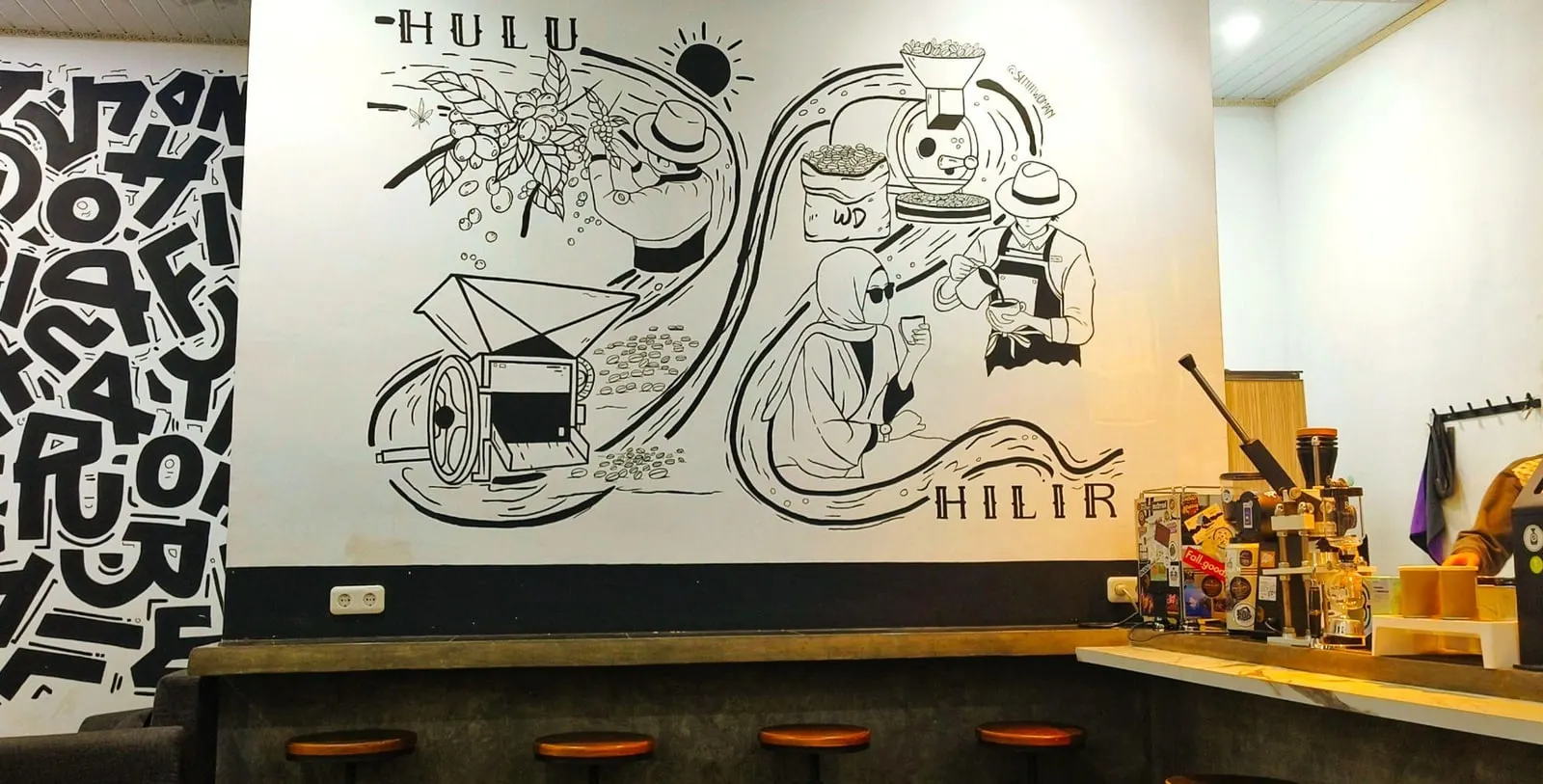
The Long Harvest: Growing a Sustainable Future Beyond Coal in Muara Enim
Robby Anugrah Putra is building a specialty coffee industry in Muara Enim, so that a district shaped by coal has something lasting to grow instead.
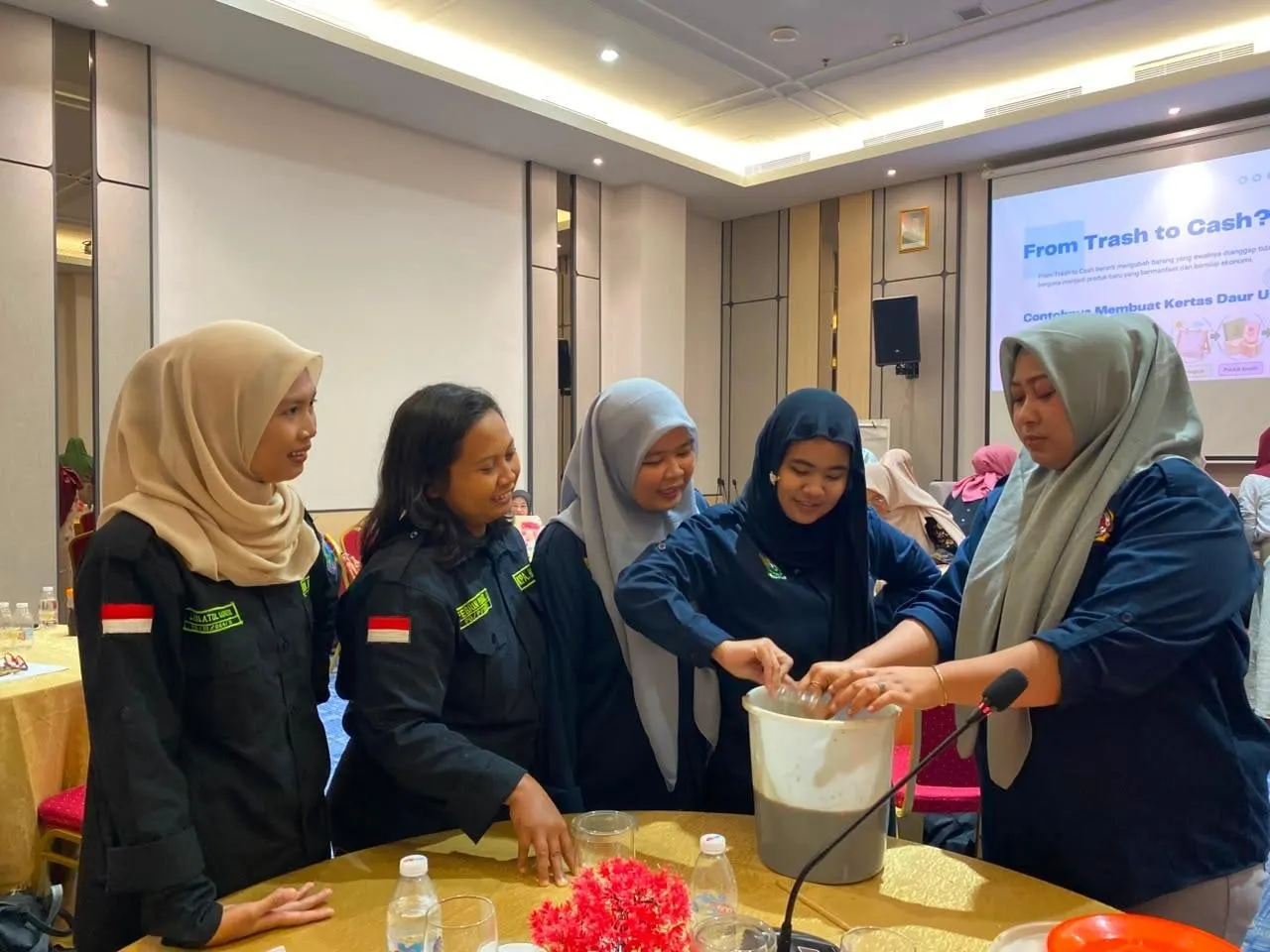
Forging FORBESS’ Future Ahead
A midwife married to a mine worker is asking what her family will do when the work ends, and building the answer through a women's forum and a youth organisation with a route into government.