
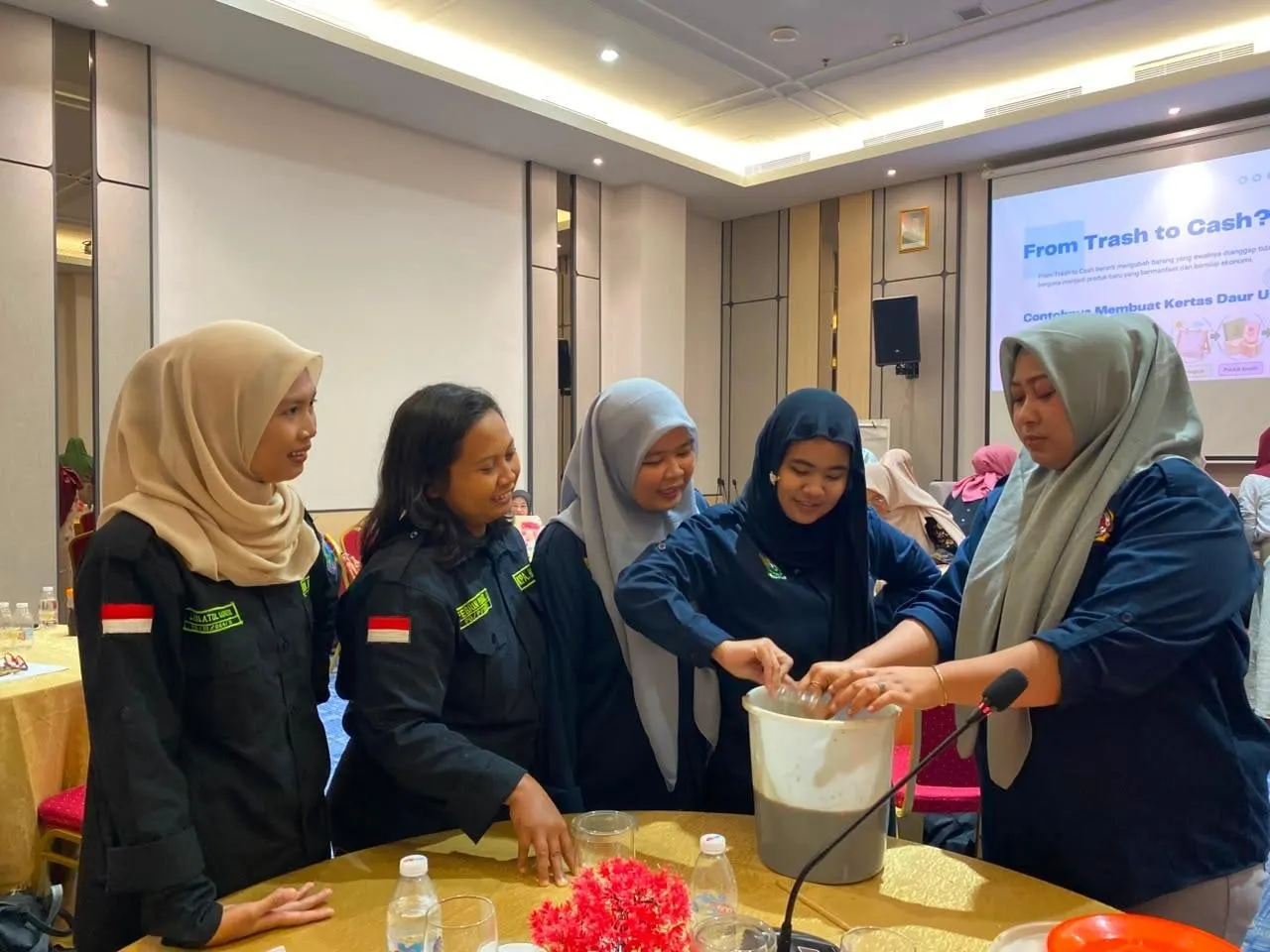
Forging FORBESS’ Future Ahead
A midwife married to a mine worker is asking what her family will do when the work ends, and building the answer through a women's forum and a youth organisation with a route into government.
Thirty-three-year-old midwife Fransiska is brimming with ideas about how women and young people can build a future beyond mining.
Like many families in Lahat and Muara Enim, her household is connected to the industry. Her husband works at a gold mine in Papua, returning home only three times a year.
Yet she does not assume that the work will always be there.
“This is personal because my husband works in mining,” the mother of two says. “I am already thinking about ten or fifteen years from now. The work will eventually end, the mine will close, and production will certainly be reduced.”
She has raised the question with him repeatedly: “What will we do when you no longer work in the mine?”
It is a question many young families in mining regions will eventually have to confront. Fransiska, ahead of the curve, is asking it now, while there is still time to build an answer.
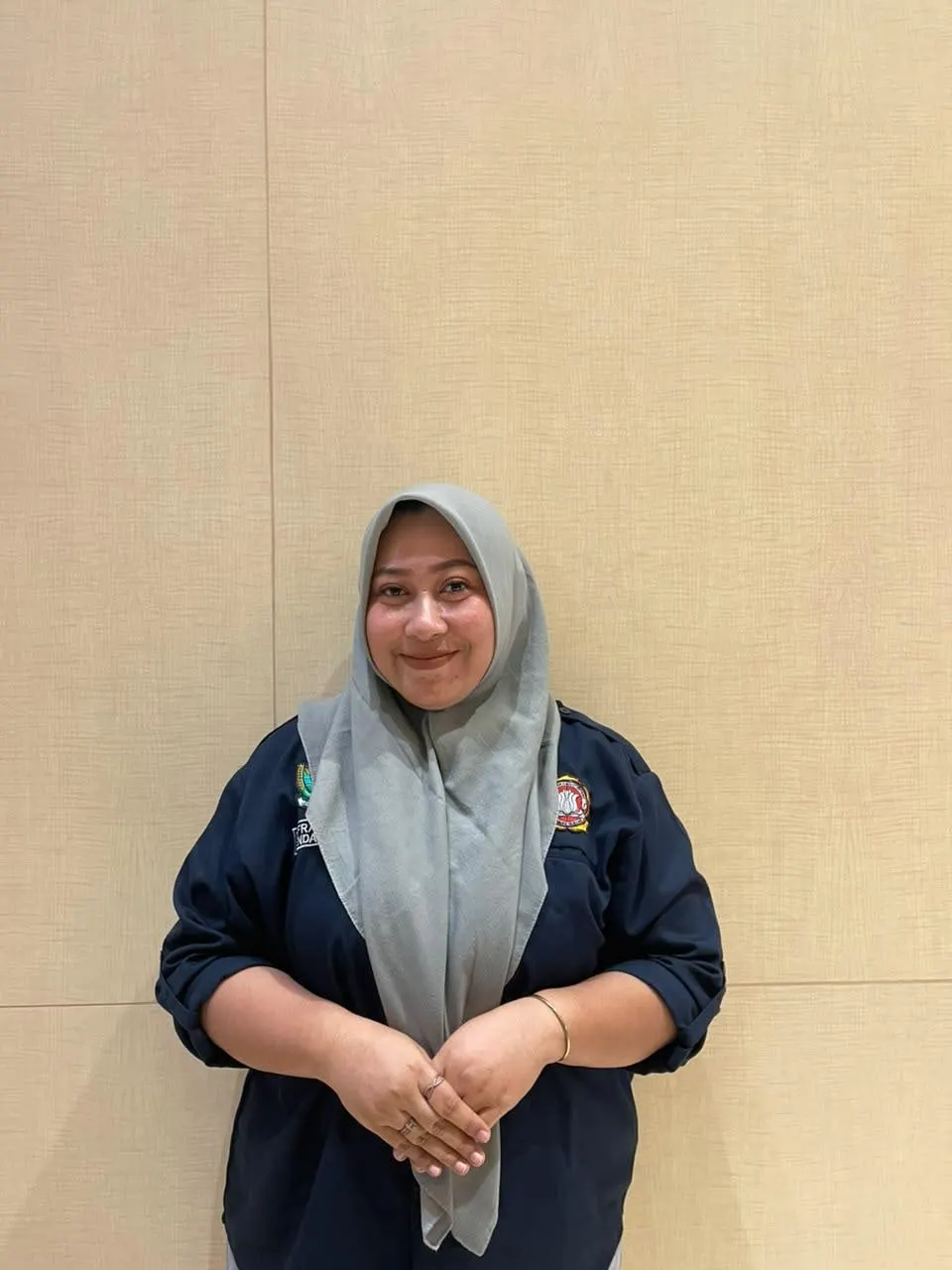
Learning to See Other Possibilities
Fransiska has attended three training workshops organised by Yayasan Mitra Hijau (YMH). Before these, she says, she had not encountered similar opportunities offered by other foundations in her area.
In Muara Enim, she joined the final training on packaging and label design, alongside demonstrations of eco-enzyme and recycled-paper production from household waste. Each workshop added another practical skill, but their greater value lay in widening what she believed was possible.
“Here, through YMH, I am very happy because it opened our perspective,” she says brightly. “We do not only have to work in mining. We can build businesses.”
That widening of perspective was intentional. As YMH’s field coordinator, Ressy worked alongside Dwi Annisyah to do more than just bring women into training rooms. They aimed to encourage these women to recognise their place in conversations often treated as the domain of men.
I wanted to build the understanding that women should also be leaders, and that women should realise their opportunities are equal to men’s.
The conclusion of the IKI-JET project therefore feels premature to her.
“Of course, we are very sad that it is ending,” she says. “We very much hope YMH will return.”
Ressy acknowledges that six months was too short to develop this critical awareness fully. Yet Fransiska offers a glimpse of that intention taking root. For her, this is merely the beginning of her ventures.
Her mother operates a warung nasi, or rice stall. Fransiska has begun using it to help other women sell their products, offering them space at the stall and applying what she learned about packaging and promotion. For now, she sometimes repackages products made by others. Eventually, she wants to produce something of her own.
One idea has taken root in the discarded bunches of nearby oil-palm plantations.
Fransiska says that during the rainy season, an edible mushroom known locally as jamur sawit grows on empty oil-palm fruit bunches discarded on plantation land. Residents collect the mushrooms in the morning and sell them locally, but their availability depends on the rain.
She has been researching whether the humid conditions in which the mushrooms grow could be recreated in a controlled space, allowing residents to cultivate them beyond the rainy season. The mushrooms could be sold fresh or developed into products such as mushroom crisps.
It remains an idea to be explored, but the seed is sown. It also reflects how Fransiska has begun to look around herself. It is no longer a place with only one economic destiny, but as a world of possibilities that have yet to be developed.
A Youth Organisation with the Government’s Ear
Fransiska’s influence does not rest only on her participation in FORBESS. She is also active in Karang Taruna, Indonesia’s community-based youth organisation.
Karang Taruna, she explains, is a formally recognised organisation with links extending from the subdistrict to the regency government. Those relationships have significant practical value. When the organisation sought access to fly ash and bottom ash, or FABA, from a Tanjung Enim coal-fired power plant, Fransiska said government support helped it establish a Memorandum of Understanding (MOU) with the plant.
Karang Taruna has been exploring how the coal ash could be used to produce paving blocks and fertiliser. The initiatives have not yet reached mass production. Most members have other jobs, leaving the organisation dependent on volunteers or occasional profit-sharing when orders are received.
Still, the organisation has equipment, access to materials and experience developing proposals. More importantly, it possesses something many informal youth groups struggle to secure, and that is an institutional route into government.
Fransiska says the treasurer of Karang Taruna at the regency level also works within the Regional Development Planning Agency, or Bappeda. This gives the youth organisation a potential channel through which community concerns and proposals can enter development-planning discussions.
Karang Taruna’s position could therefore allow it to do more than organise activities for young people. It could help bring their ideas into the institutions deciding what Muara Enim’s economy will become.
For a generation expected to live with the consequences of decisions made today, this access matters. Young people need more than invitations to attend events; meaningful participation is crucial. What they need are organisations capable of carrying their proposals into the rooms where budgets, programmes and development priorities are determined.
Between Today’s Jobs and Tomorrow’s Economy
Karang Taruna’s position also exposes the difficult contradiction facing young people in a mining-dependent region.
The organisation is working to ensure that local jobseekers hear about vacancies and can access recruitment opportunities when companies hire. Fransiska says arrangements are being developed so that openings from companies operating in the area are communicated through Karang Taruna.
Many of these opportunities remain connected to mining.
“Because most livelihoods here are still there,” she explains.
After all, helping a young person obtain a mining job can provide immediate income to a family. In a regency where alternative industries remain limited, turning away from those opportunities is neither simple nor necessarily fair.
Yet the same organisation helping young people enter the mining economy is also trying to prepare them for a time when that economy can no longer sustain them.
Karang Taruna has approached government agencies about vocational training and is exploring community enterprises alongside its work connecting young people with employers. Fransiska believes it could collaborate with FORBESS to develop these alternatives further.
This tension cannot be resolved by asking young people simply to reject the jobs available today. Nor can it be resolved by continuing to channel them into an industry without preparing for its eventual decline, which Fransiska realises.
A just transition must hold both realities at once: families need livelihoods now, but they also need the skills, enterprises and public investment that will give them choices later.
Keeping FORBESS Moving
Fransiska sees FORBESS as part of that longer work.
The forum brings together women who already produce food, handicrafts and other goods, as well as women who carry ideas that have yet to become businesses. Through FORBESS, she says, members can share knowledge, improve packaging, promote one another’s products and learn from women with greater experience.
Fransiska believes that trust will determine whether the forum endures.
“At the beginning, people may not trust us,” she says. “But when we show our performance and prove that we can be useful to others, God willing, they will trust us.”
She wants FORBESS to become a place where women can bring their problems and find people willing to help seek solutions. Even without continued project support, she hopes members will keep exchanging ideas, promoting products digitally and through word of mouth, and drawing on the advice of more experienced women in the network.
But goodwill alone cannot carry every idea forward. The mushroom venture requires research, cultivation knowledge and investment. Existing enterprises need access to equipment and markets. Karang Taruna’s proposals require government follow-through. FORBESS itself needs the organisational strength to turn a network created through a project into a platform that women can continue to lead.
The foundations however, have been laid through YMH’s trainings and convening. What comes next depends on whether institutions listen to the women and young people who are already imagining alternatives.
Fransiska’s question to her husband is therefore also a question for Muara Enim: what will sustain its families when mining work begins to disappear?
She does not yet have a single answer. Instead, she has a growing collection of possibilities: a rice stall that can open its shelves to other women, mushrooms emerging from what plantations discard, young people learning new skills, and two organisations that could connect community ideas with government planning.
The transition she imagines does not begin on the day a mine closes. It begins much earlier, when young families dare to ask what comes next, and when they gain the knowledge, empowerment and influence to forge the answer themselves.
More stories
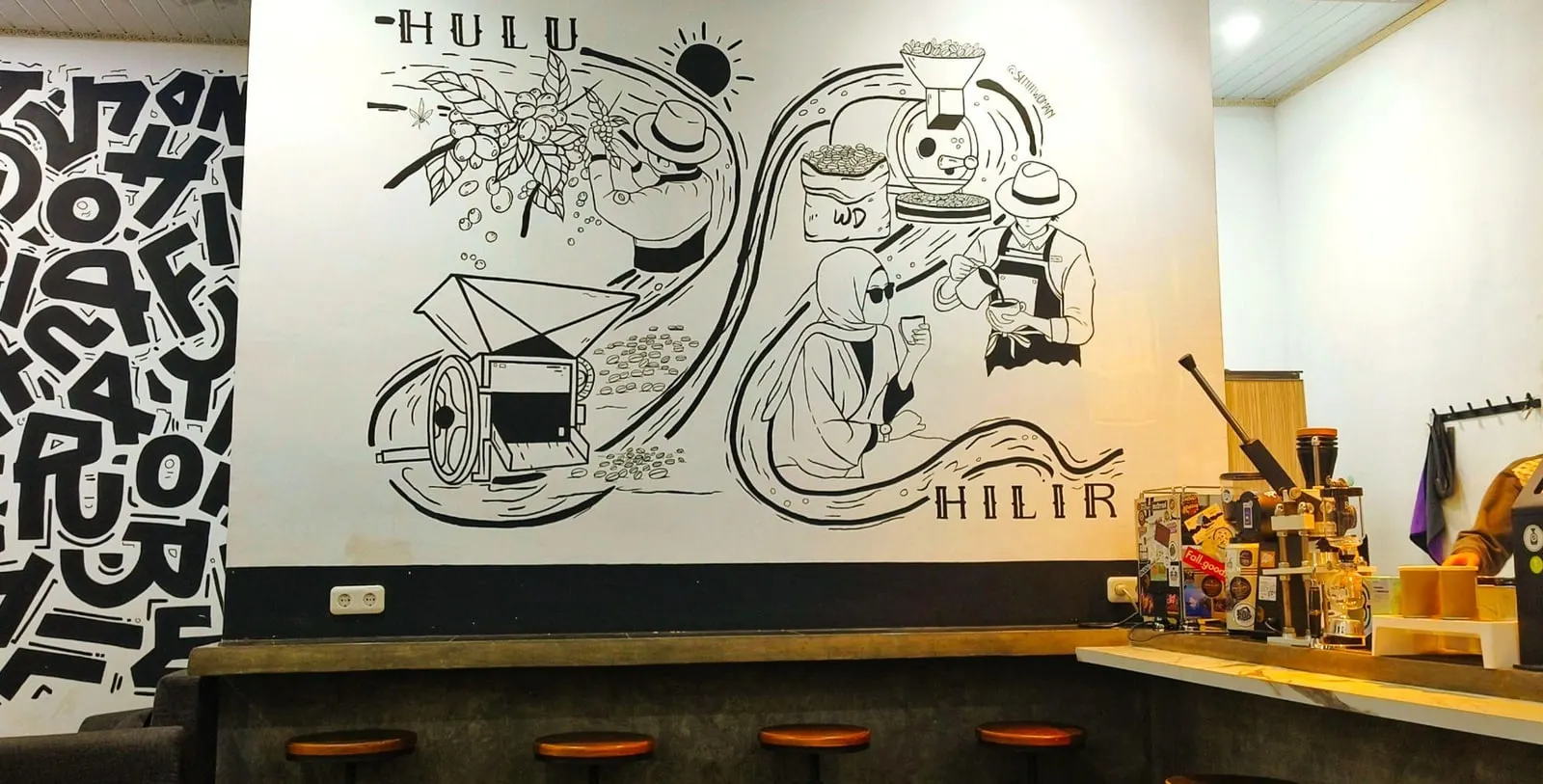
The Long Harvest: Growing a Sustainable Future Beyond Coal in Muara Enim
Robby Anugrah Putra is building a specialty coffee industry in Muara Enim, so that a district shaped by coal has something lasting to grow instead.
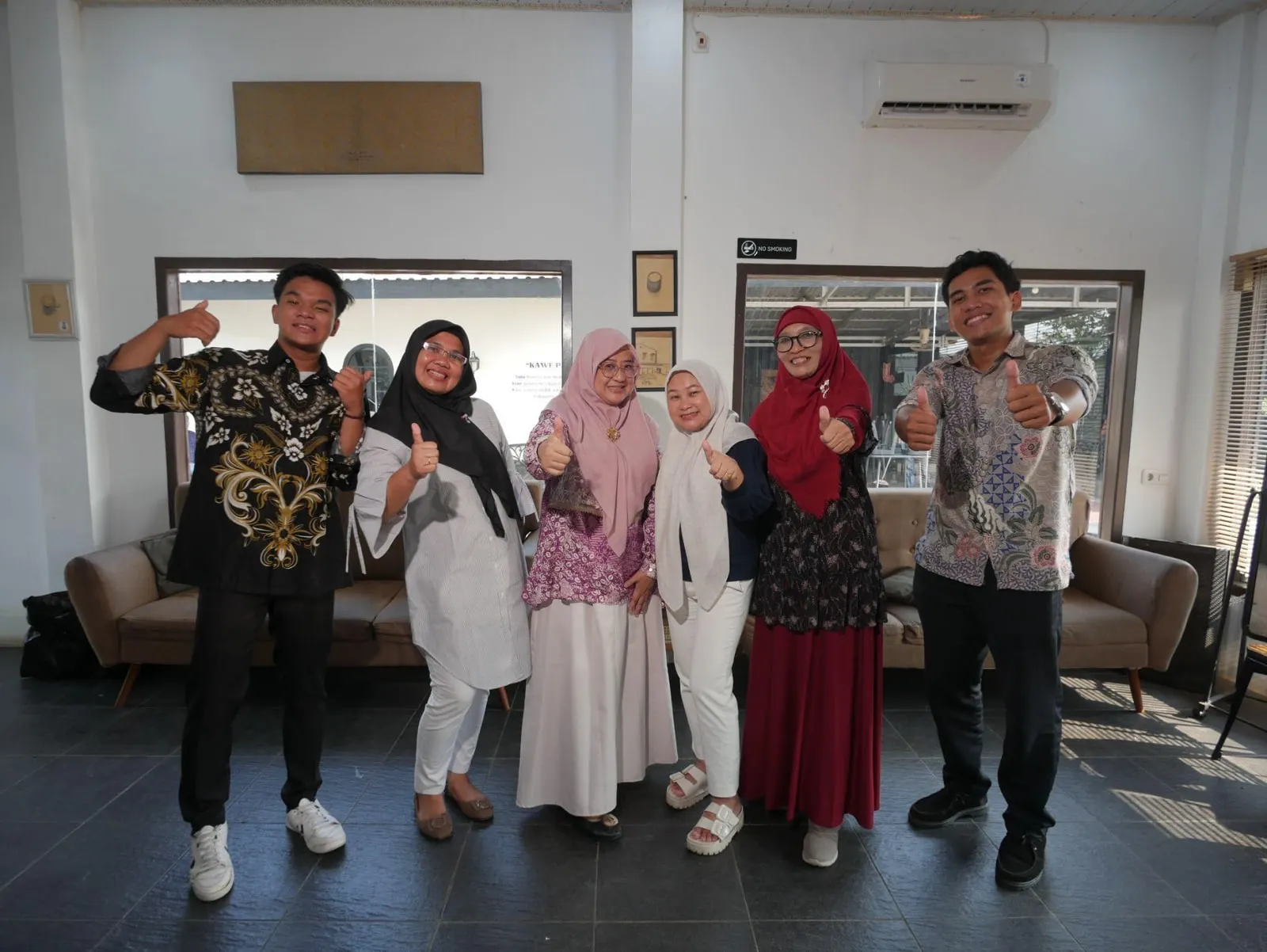
The Door They Opened: The Women Behind YMH’s Just Transition in South Sumatra
A professor, a lawyer and a former teacher ran IKI-JET’s work in South Sumatra. They had six months. Prof. Erna reckons it takes about that long simply to become known in a village.