
The Long Harvest: Growing a Sustainable Future Beyond Coal in Muara Enim
Robby Anugrah Putra is building a specialty coffee industry in Muara Enim, so that a district shaped by coal has something lasting to grow instead.
About three-and-a-half hours from the capital city of Palembang, a cosy café warmly beckons its patrons.
In its gravelled courtyard, slender trees rise between white tables and black metal stools. Amber strip lighting softens the whitewashed walls, promising youths and workers returning from the coal mines alike a place to settle into the evening. “Semende is a coffee-producing subdistrict of Muara Enim” is painted in neat, black script on one wall.
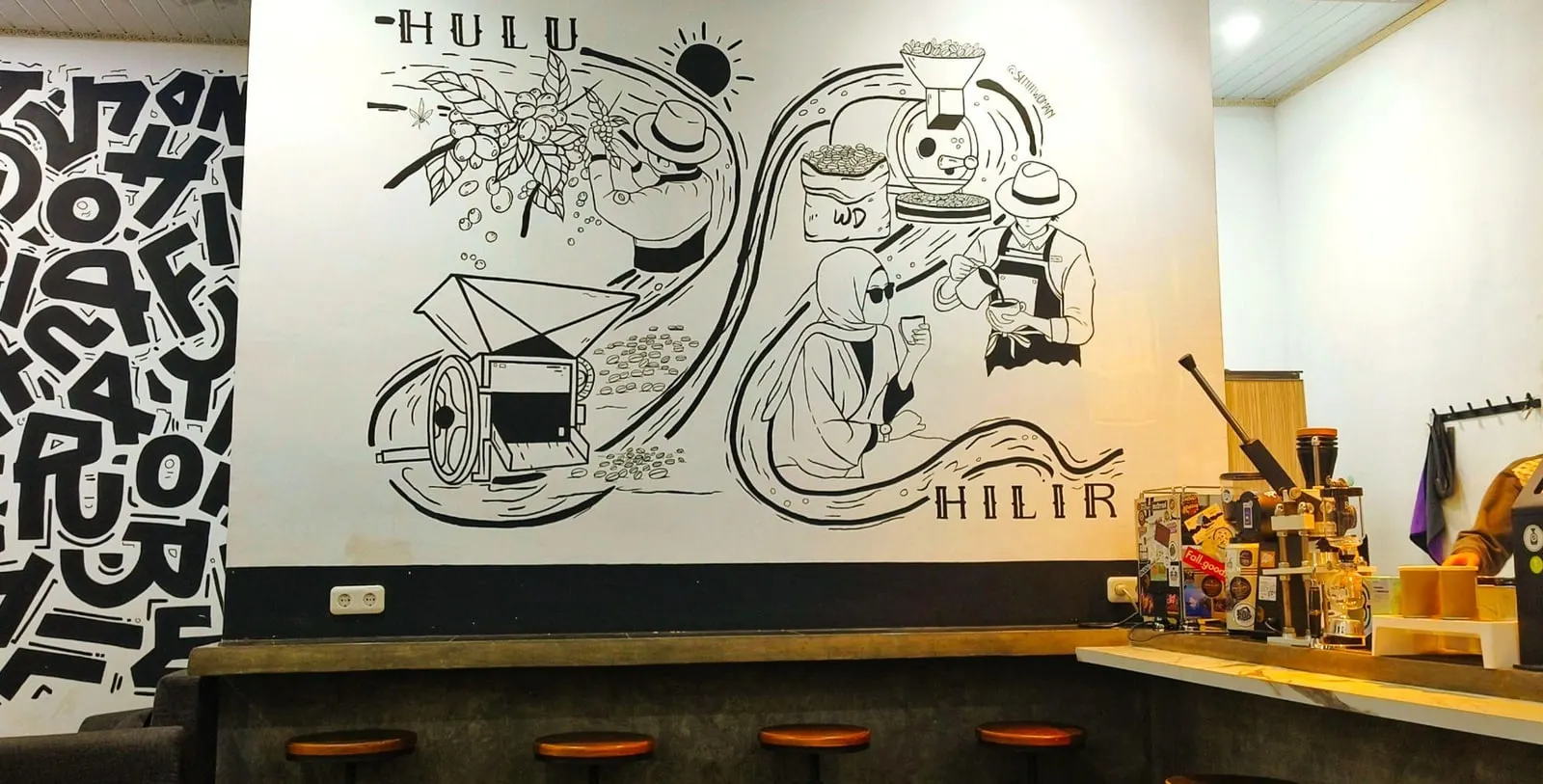
Inside, a hand-painted mural illustrates the journey of coffee from hulu (upstream) to hilir (downstream). A farmer tends to the coffee plants before the cherries are harvested, processed and roasted, finally resulting in someone enjoying a cup of coffee. Adjacent to it, a bespectacled, unassuming man brews coffee behind the bar.
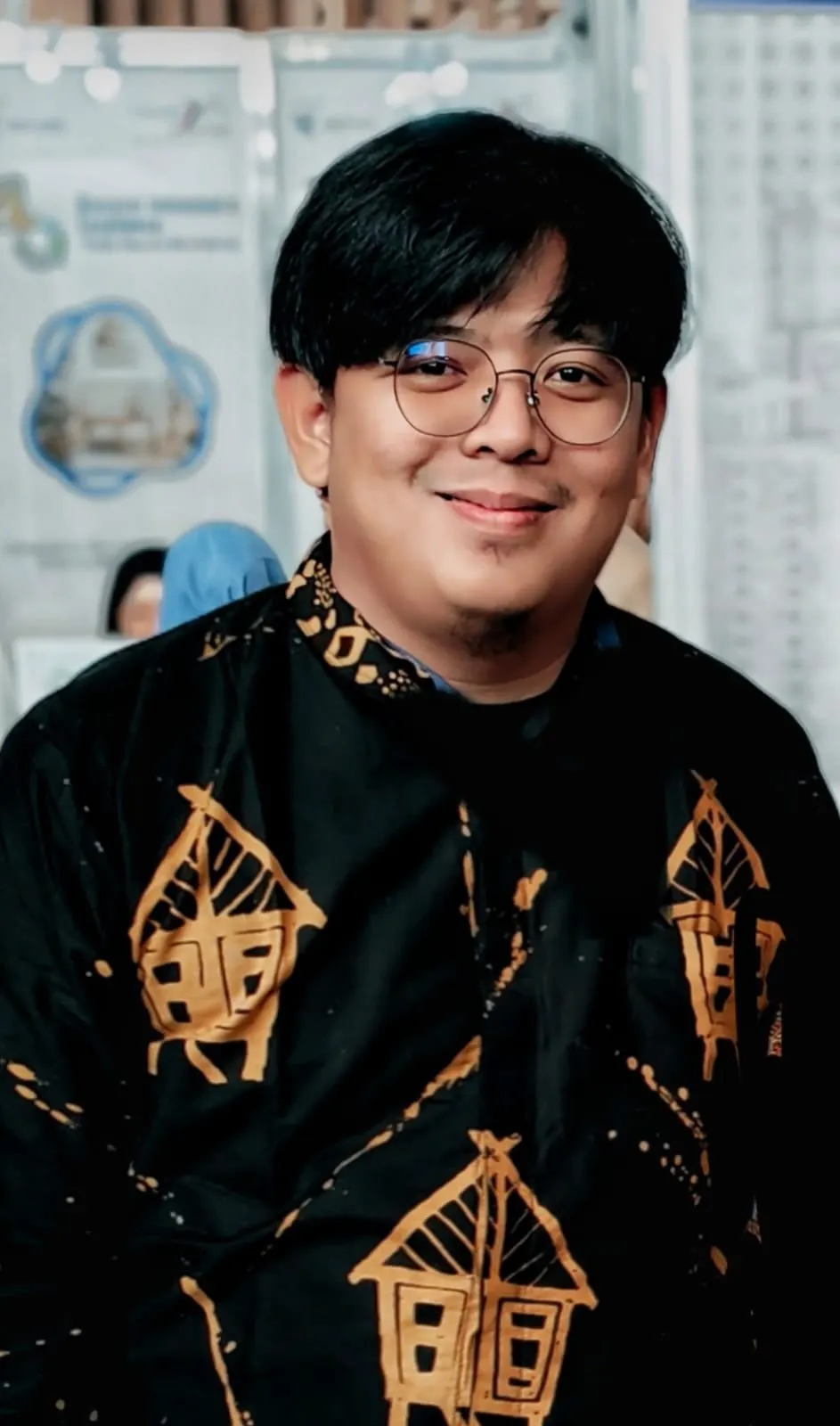
Robby Anugrah Putra is the founder of W.D. Coffee and Roastery. The café specialises in single-origin coffee from Semende and locally produced blends of Arabica, Robusta and Liberica. Its roastery also processes green beans and sells roasted beans and coffee powder.
Yet the café is only the visible end of a much longer undertaking.
“Muara Enim has cultivated coffee for a long time, since 1958, but its production and processing remained traditional,” Robby begins, serving the coffee he has just brewed.
Since 2018, Robby has pursued the development of Muara Enim’s coffee industry. Using his own capital, he purchased modern equipment and machinery, organised training and helped farmers and processors obtain certification. The equipment included pulpers and hullers used at different stages of turning harvested coffee cherries into green beans.
“Once they became proficient in using the machines, I gave the equipment to them for free,” the 34-year-old says. He did not stop there. He found the Muara Enim Coffee (MEC) community on Instagram to gather over 600 other like-minded coffee enthusiasts in this pursuit. Prizes from competitions won by this community are used to further fund these efforts.
It's a long-term investment. The idea is to change the mindset of the producers and processors in the industry. I began in 2018 and continue to train new farmers until today.
By improving how coffee cherries are selected and processed, Robby hopes farmers and processors can produce higher-grade green beans that fetch higher prices. He now works with producers across Tanjung Agung, Panang Enim and Semende, travelling to farms and processing sites to inspect the quality of their beans.
If one loves their district or hometown, they would be willing to make sacrifices for the sake of its development.
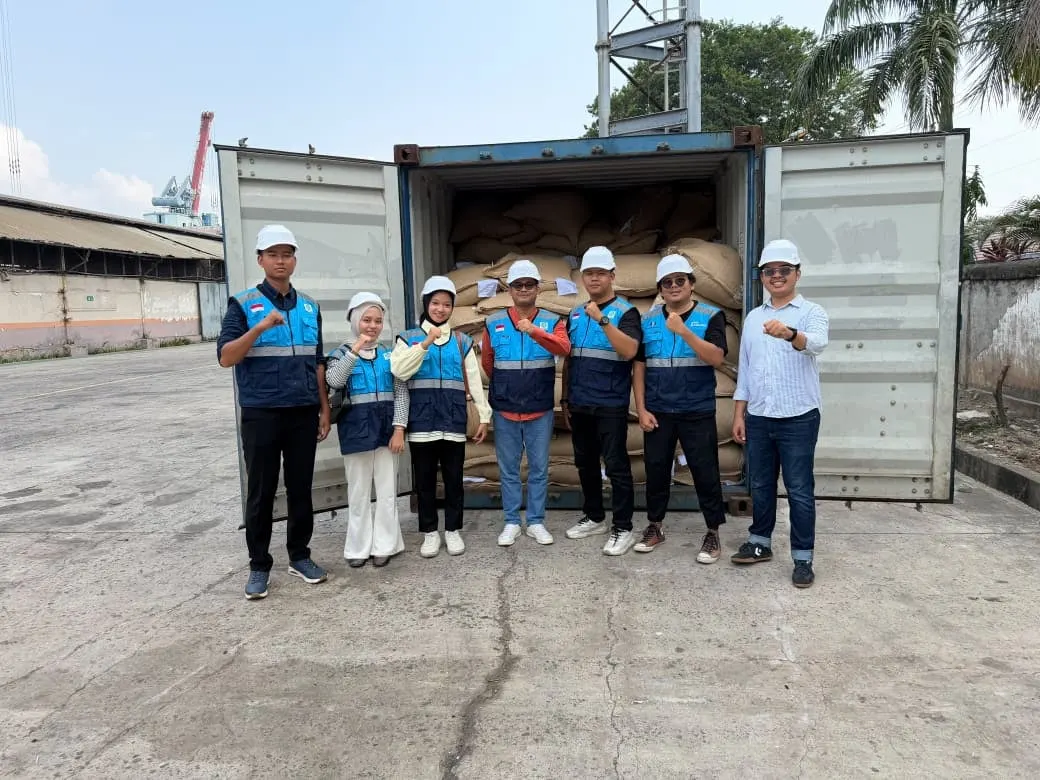
Robby says his efforts to identify buyers also helped connect South Sumatra’s coffee with markets further afield. In January 2025, Grade 1 Arabica from Semende formed part of South Sumatra’s first large-scale direct commercial coffee shipment through Palembang’s Boom Baru Port, with the Semende beans bound for Australia. Through the collective effort of MEC and farmers, Semendo coffee was also exported to Egypt, Turkey, Vietnam and Malaysia.
What Lies Between Hulu and Hilir
The mural at W.D. Coffee presents a graceful journey from farm to cup. In practice, the space between hulu and hilir is more complicated.
Farmers concentrate on planting, cultivation, fertilisation and harvesting. Once the cherries have been picked, however, their quality can be preserved or lost during selection, pulping, drying, hulling, grading, storage and transportation. Producing higher-grade coffee requires care throughout this chain.
According to Robby, coffee collectors and intermediaries do not always share the same interest in preserving quality. Their businesses may depend on purchasing and selling large volumes, including defective or lower-grade beans that can still enter commercial markets.
Robby has chosen a different path. He prioritises higher-grade beans and works closely with farmers and processors to conduct quality checks. The aim is not simply to produce better coffee. A higher grade can also earn producers and processors a better price for their work.
Changing an established market is nevertheless difficult. Farmers must believe that the additional care required during cultivation and processing will be rewarded. Buyers, in turn, must provide a dependable market. Robby has spent years building both.
He is equally critical of development programmes that arrive with their own preconceived priorities. Robby has watched programmes encourage farmers to roast, grind, package and brand their coffee. These activities may create numerous products and briefly attract attention, but he questions whether they address what farmers need most.
A farmer may suddenly be expected to become a processor, roaster, packaging designer and marketer at once. When the programme ends after a month or two, the group may be left with several brands of coffee but no sustained market.
“How many tonnes are ultimately purchased from them?” he asks. Too often, in his experience, the answer is none.
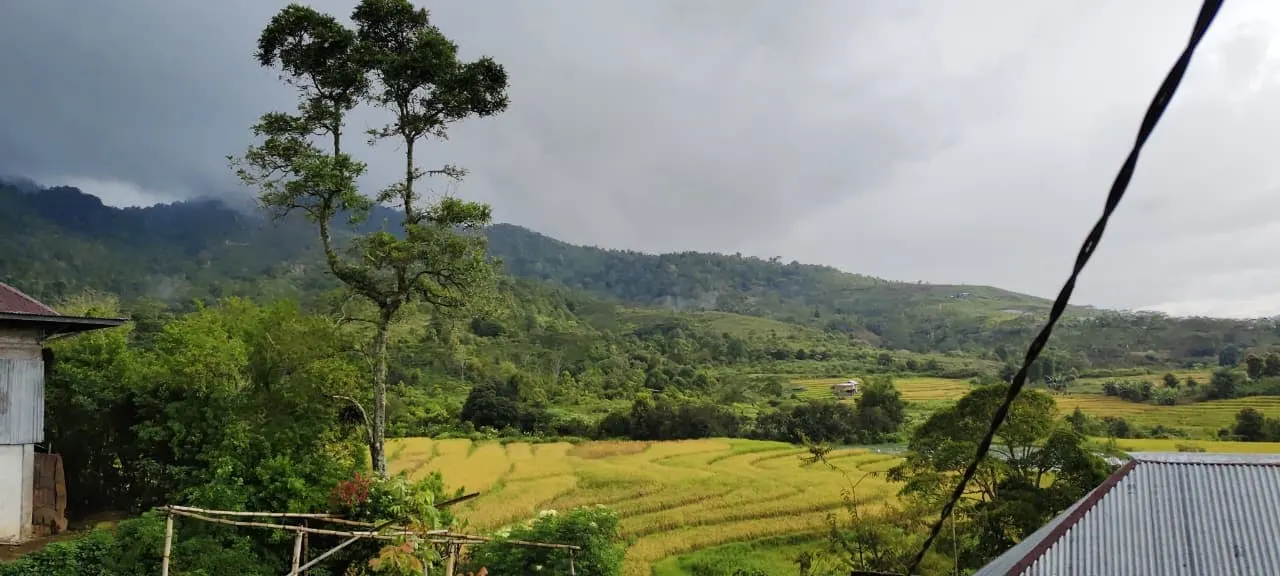
This is particularly difficult in remote highlands like Semende, where poor connectivity, limited marketing capacity and the distance from larger markets make it difficult for small groups to sell packaged products directly to consumers. With limited time and resources, the indigenous farmers can lose their focus on cultivation without resolving the question of who will buy their products.
For Robby, specialty coffee is a long game. Rather than treating beneficiaries as passive recipients, programmes must first understand what people already know, what role they play in the industry and what they need to perform that role better.
Working Within an Existing Ecosystem
This was the ecosystem Yayasan Mitra Hijau encountered through the IKI-JET Project.
Robby was not a beneficiary waiting to be introduced to coffee. Nor did the project create W.D. Coffee, purchase the machinery he had distributed or originate his vision for Muara Enim. By the time he became involved, he had already spent years training producers, inspecting beans, developing market connections and investing his own resources.
The project’s contribution began with recognising that experience.
Rather than deciding in advance what local communities required, YMH conducted a mapping exercise and consulted locals already working within Muara Enim’s economic and social landscape. Dwi Annisyah, Assistant Field Coordinator at YMH shares that this allowed the project to identify Robby as a local expert who understood the chain from cultivation to brewing.
Through the project, Robby became a trainer to local youths and women from South Sumatra Women’s Forum for Just Energy (FORBESS), YMH’s network of women entrepreneurs working on Just Energy Transition. He taught them how to roast and brew high-quality, specialty coffee to expand the downstream coffee industry. This was part of YMH’s ongoing efforts to train locals in green jobs to diversify the coal-dependent economy of Muara Enim.
Robby demonstrating how to use the coffee roaster machine to roast coffee at the Coffee Roasting and Brewing Workshop organised by YMH. A group of workshop participants avidly listening to Robby explain about the different types of coffee.
Ibu Trasyiani, a member of FORBESS from Semende, has collaborated with Robby to supply coffee beans. Conversely, it was also through MEC that Ari, a young entrepreneur, was introduced to YMH to join its youth platform, Rembuk Serasan Muara Enim to continue training youths and women about coffee roastery.
These connections matter because no single farmer, trainer, entrepreneur or organisation can build a regional coffee industry alone. Farmers need technical knowledge and reliable buyers. Processors need appropriate equipment and consistent supplies. Roasters need high-quality beans. Young entrepreneurs need opportunities to build their network and capacity to reach new markets. It is evident that Robby, through FORBESS and the MEC is building a locally-led coffee movement, from the ground up.
Some of these relationships have continued beyond the project’s activities. Robby and the leader of FORBESS, who is exploring economic opportunities for her land, have continued discussing the possibility of working together. Dwi shares that it is her hope that these cultivated networks and relationships can sustain long after the project cycle ends.
What Grows After Coal?
Coal cannot be omitted from this story. After all, industrial mining at Air Laya in Tanjung Enim began under the Dutch colonial administration in 1915. Since then, coal has shaped Muara Enim’s economy, infrastructure and employment. Its presence is everywhere.
Many of the workers who visit W.D. Coffee are employed by the mines. Robby observes that they generally have more disposable income to spend in cafés than other local residents. His own brother works in a coal mine while also engaging in other trades, including coffee. Even a business imagined as part of Muara Enim’s economic diversification therefore remains connected to the coal economy of the present.
At the same time, Robby speaks of worsening roads, uncertainty surrounding mining activities and communities with limited power to influence decisions about land-use around them. Young people like him, he says, often feel helpless to speak up or question decisions that will shape what they inherit.
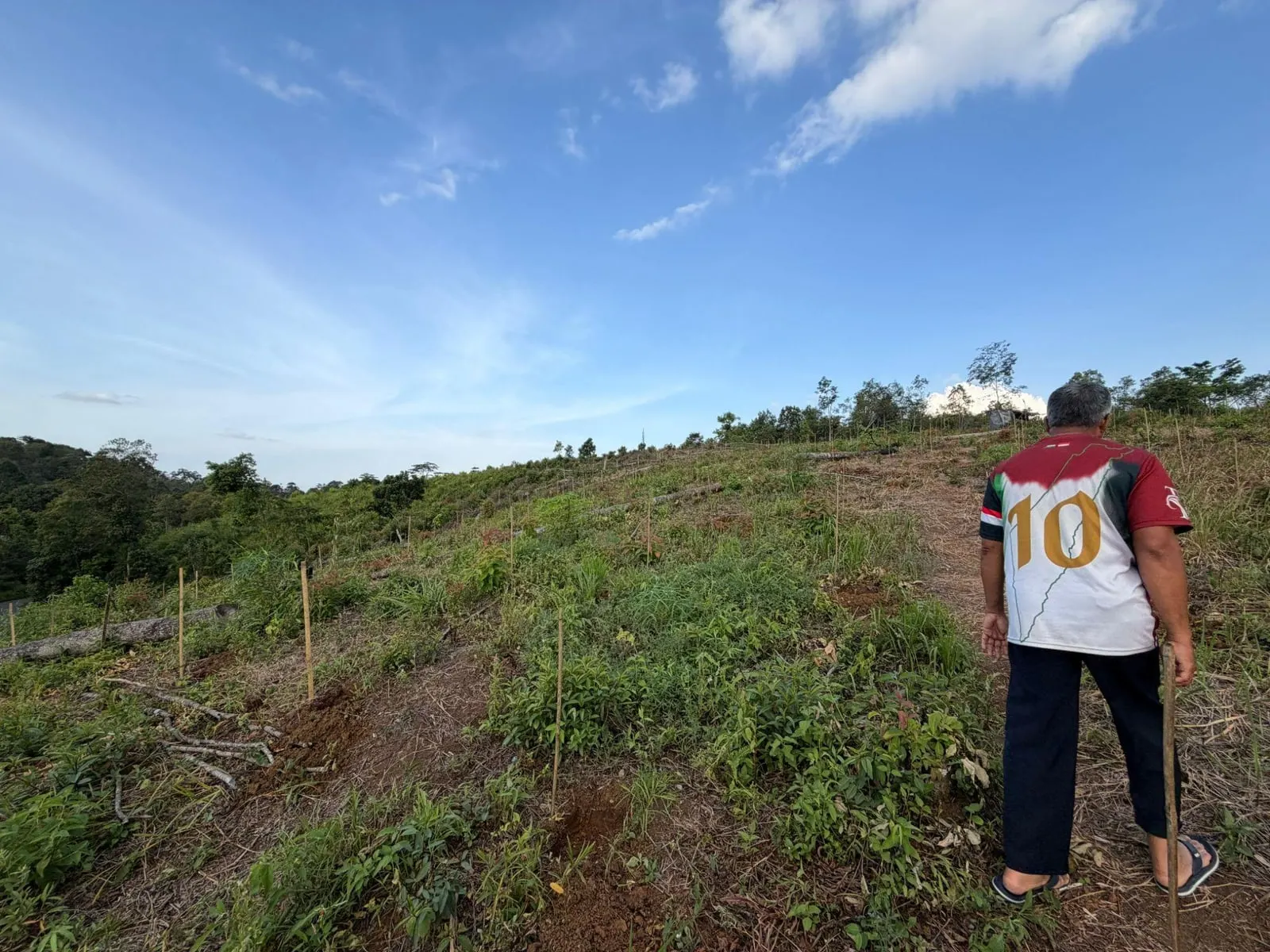
Robby firmly believes that developing a stronger coffee industry can demonstrate that Muara Enim’s land has lasting value above ground and prevent land encroachment. He is particularly interested in exploring the potential of Liberica coffee on suitable acidic or marginal land, which he says makes rehabilitated coal mines suitable.
Its export potential, Robby believes, is considerable. His new farm, Pinca MEC, explores this potential in remote Talang Gudang, by cultivating one hectare not solely for commercial production, but for ecological education and tourism. Visitors could learn how coffee is grown, explore whether damaged land can support new forms of cultivation and understand why Muara Enim’s economy can and must eventually extend beyond coal.
As the IKI-JET Project reaches the end of its cycle, this forward-looking proposal becomes increasingly important. The question is no longer only what the project has accomplished, but what the relationships and knowledge fostered through it may make possible next.
Robby says he is willing to work with companies and the government, so long as such collaboration benefits the people of Semende. His determination is deeply personal.
He has loved coffee as a child. He first travelled to Semende with his late grandmother in 2015. It was she who taught him how to appreciate and cultivate coffee. He recollects the beauty of the landscape and watching children playing freely there.
“There are so many children who will inherit the land,” he says, as well as older people whose lives remain inseparable from it. For Robby, this is why the discussion cannot be reduced to the monetary value of the resources beneath it.
To me, the people of the land and the community are priceless compared with what lies under the earth.
Let us enjoy the bounty of the harvest and agriculture rather than these natural resources. It would be a great pity to waste the beauty of Semende.
Back at W.D. Coffee, the mural ends with someone lifting a cup to their lips. It is the hilir, the downstream destination of everything that came before: the land, the tree, the farmer, the red cherry, the processor and the roaster.
Yet Robby’s story invites us to follow the mural in reverse, from the cup back to the people and the land from which it came. We are reminded that young people who are already leading the coal transition must be recognised and included in deciding their post-coal future.
In Muara Enim, in coffee lies the hope of a future liberated from coal, homegrown and brewed by her own people.
More stories
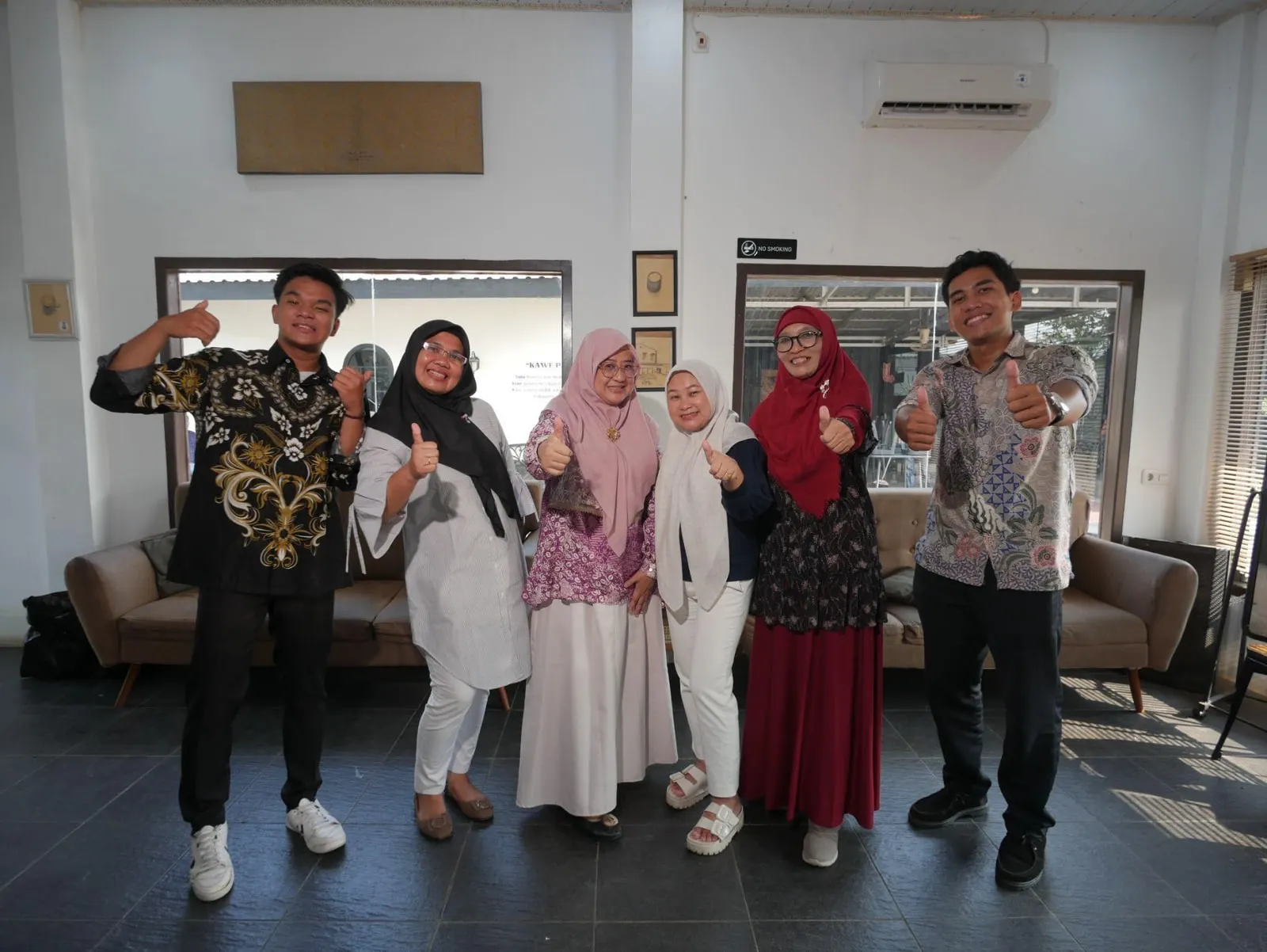
The Door They Opened: The Women Behind YMH’s Just Transition in South Sumatra
A professor, a lawyer and a former teacher ran IKI-JET’s work in South Sumatra. They had six months. Prof. Erna reckons it takes about that long simply to become known in a village.
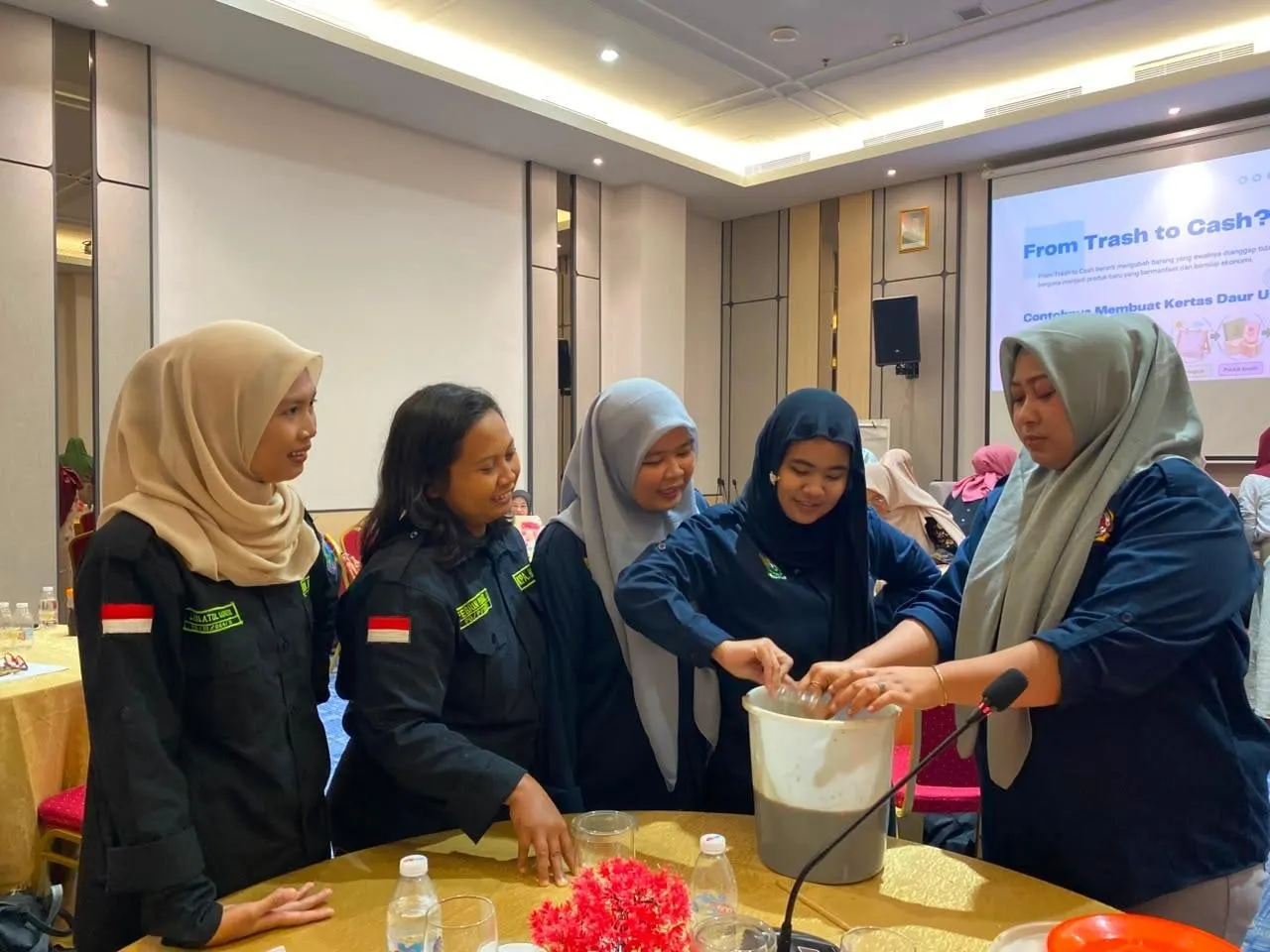
Forging FORBESS’ Future Ahead
A midwife married to a mine worker is asking what her family will do when the work ends, and building the answer through a women's forum and a youth organisation with a route into government.