Regional Priorities Enter the National Just Transition Dialogue
South Sumatra and East Kalimantan took four recommendations to national ministries in Jakarta, on post-mining solar, workforce transformation, worker protection and the place of communities in the transition.
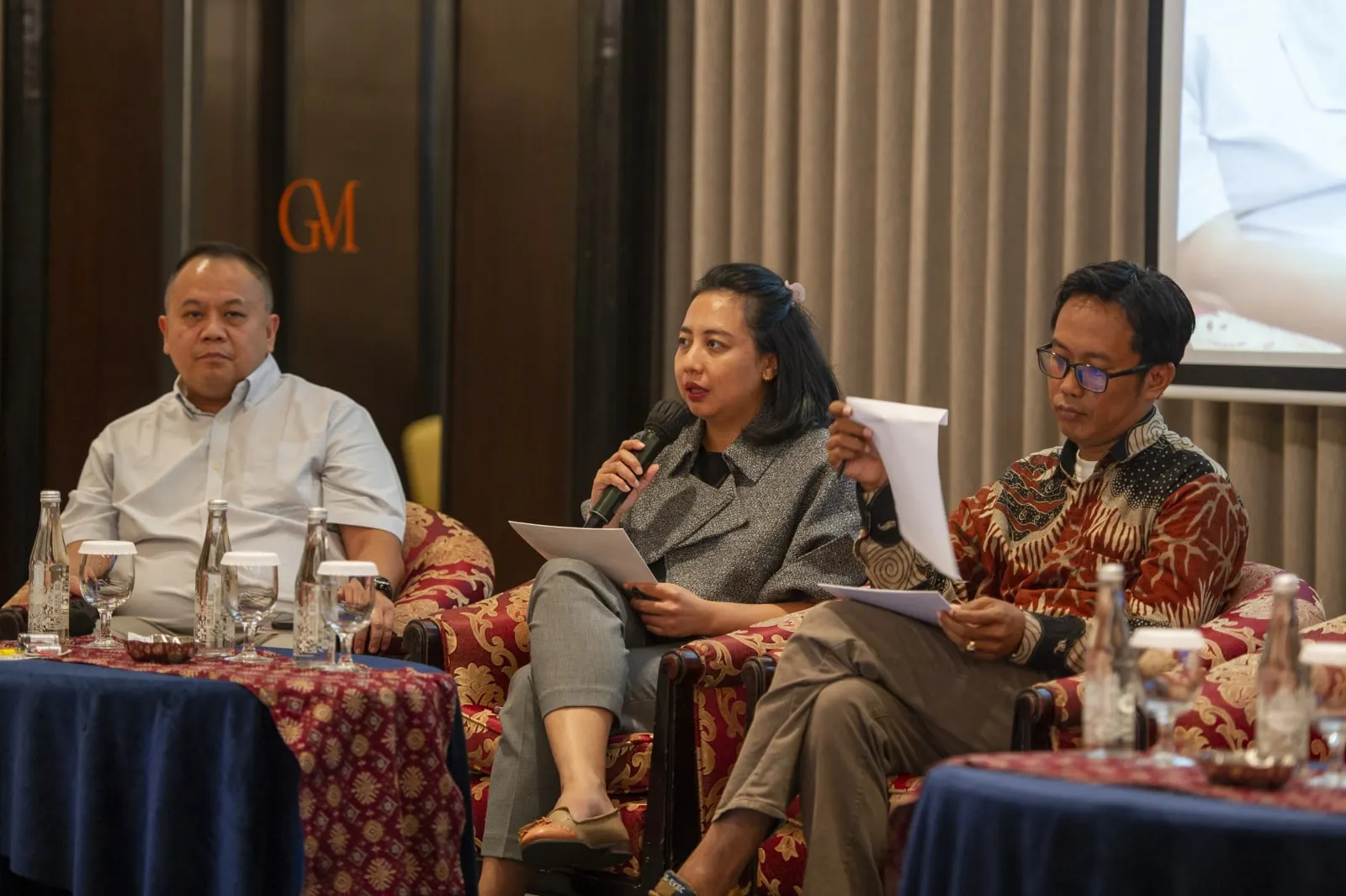
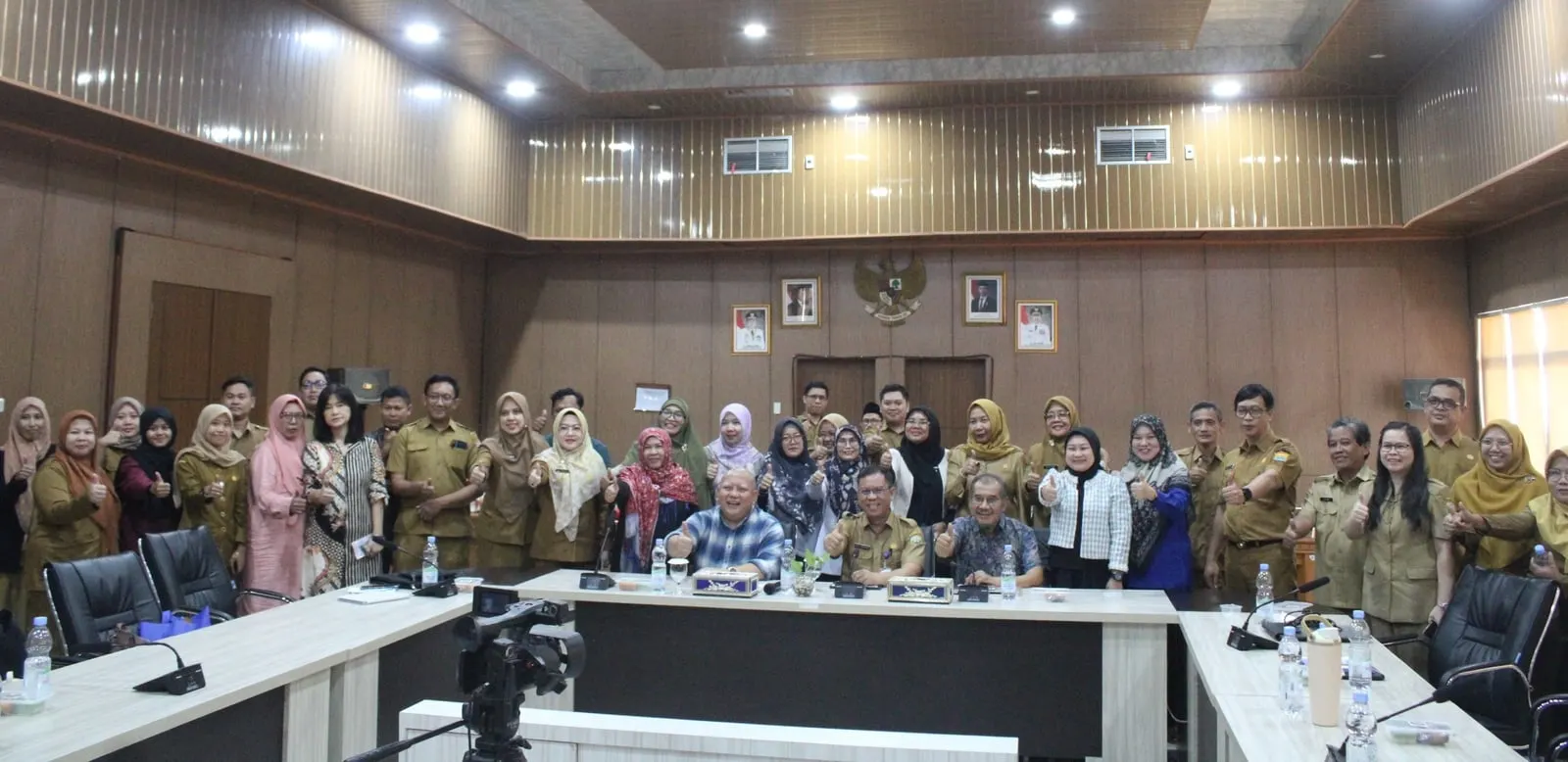
Representatives of national and provincial governments, labour unions, civil society organisations, development partners and communities gathered on 9 June 2026 for the National Policy Dialogue on Regional Economic Transformation in Coal-Producing Regions.
Chaired by the Director of Energy, Mineral Resources and Mining Affairs at the Ministry of National Development Planning (Bappenas), the dialogue shared experiences from South Sumatra and East Kalimantan and presented four policy recommendations to national ministries and institutions.
The recommendations addressed the use of post-mining land for solar power, workforce development, the inclusion of just transition principles in post-mining criteria, and community empowerment.
Developing Solar Power on Post-Mining Land
The first recommendation highlighted the potential to develop up to 100 gigawatts of solar photovoltaic capacity on post-mining land. Participants noted that former mining areas could provide the land required for large-scale solar development without causing deforestation. Their use could also encourage compliance with mine reclamation obligations.
In the longer term, some areas could support agrivoltaics, combining solar power generation with agricultural production. Participants also emphasised the importance of enabling communities to use former mining land for food production, employment and the supply of raw materials to local small and medium enterprises.
The Ministry of Agrarian Affairs and Spatial Planning/National Land Agency supported the use of post-mining land for solar development. It reported that it had been coordinating with the Ministry of Energy and Mineral Resources to identify approximately 24,000 hectares with potential for solar projects. However, land tenure and legal status would need to be clarified before development could proceed.
The Ministry of Finance encouraged local governments to consider financing sources beyond the state budget, including green sukuk, green bonds, SDG bonds and international climate finance. It advised local governments to prepare proposals with measurable just transition indicators and gender equality considerations.
PLN confirmed that solar development on post-mining land was reflected in the 2025–2034 Electricity Supply Business Plan. Of the 69.5 gigawatts of planned new generation and storage capacity, approximately 42 gigawatts would come from renewable energy. PLN also stressed the need to assess grid connection points and substations because transmission access affects project costs and feasibility.
The discussion concluded with support from the land agency, the Ministry of Finance and PLN for advancing the solar initiative, alongside recognition that land, financing and infrastructure issues required continued interagency coordination.
Preparing the Workforce for Economic Transformation
The second recommendation focused on workforce transformation and economic diversification in South Sumatra. Tourism and coffee production were identified as priority sectors.
The proposed roadmap included workforce and skills mapping, reskilling and upskilling programmes, stronger institutional coordination, revitalisation of vocational training centres, and improved access to financing and social protection.
For tourism, the priorities included destination development, human resource capacity building, improved services and stronger links with local economies. For coffee, the proposed measures included raising productivity, strengthening cooperatives and small businesses, expanding certification, promoting value-added processing and using post-mining land for coffee cultivation and other green economic activities.
Bappenas informed participants that the employment effects of the energy transition had been incorporated into the National Medium-Term Development Plan through its green economy agenda. This included green jobs, vocational education, workforce retraining and adaptive social protection.
Bappenas also considered the competency development roadmaps prepared in South Sumatra and East Kalimantan to be closely aligned with the national Green Jobs Roadmap. It reported that discussions were taking place with the International Labour Organization on establishing a Skills Development Fund to support workforce training.
Strengthening Protection and Participation for Workers
The third recommendation concerned the inclusion of just transition principles in post-mining closure and reclamation criteria.
Representatives of KSPI and KSBSI raised concerns about contract employment, outsourcing, limited job security and inadequate social protection. Labour organisations had advocated for just transition provisions to be included in collective labour agreements.
The proposed provisions included Just Transition Committees comprising worker and management representatives, workforce retraining, protection against climate-related impacts, greater assistance during layoffs and stronger worker participation in transition planning.
The Ministry of Manpower welcomed the initiatives undertaken by labour unions and supported the inclusion of just transition principles in collective bargaining agreements. It also reaffirmed its commitment to facilitating worker representation and social dialogue in areas where labour organisations remained underrepresented.
No definitive conclusion was reached on incorporating just transition principles into official post-mining success criteria because the relevant Directorate General of Mineral and Coal was not represented. Further discussions with the Ministry of Energy and Mineral Resources were therefore required.
Placing Communities Within the Transition
The fourth recommendation focused on community participation and empowerment before mining, during mining operations and after mining activities end.
Priorities for the pre-mining phase included public awareness, just transition roadmaps, spatial planning, land tenure clarity and inclusive participation. During mining operations, the recommendations covered environmental and public health protection, infrastructure, social protection, small-business development, transparent corporate social responsibility governance, youth capacity building and transition financing.
For the post-mining phase, the recommendations included productive reclamation, the use of post-mining land for agriculture and community enterprises, stronger village-owned enterprises, and continued community participation in planning new economic activities.
Bappenas emphasised that the energy transition should not be understood only as a shift to cleaner energy. It should also improve social welfare and expand economic opportunities.
Bappenas highlighted Prokesra Berdaya, which brings together 25 community empowerment programmes across eight ministries and agencies. The programme focuses on capacity building, long-term mentoring and access to finance, markets, employment services and entrepreneurship.
The discussion concluded that progress should be measured not only through renewable-energy deployment, but also through the ability of vulnerable and low-income communities to access new economic opportunities.
Participants also expressed the hope that initiatives supported by the IKI-JET Consortium, including capacity-building activities and regional consultation forums, would be sustained and institutionalised by local governments.
The dialogue reaffirmed the need for continued coordination among national and local governments, development partners, industry, labour organisations and communities. It also identified where further policy discussions would be required to translate the four recommendations into regional economic transformation that protects affected workers and communities.