Solving Energy Access Through Just Energy Transition: The Community-Owned Kobulu Micro Hydro Project in Buayan Village
CANSEA and its network members drove into the Borneo interior to see a community-owned micro hydro system that TONIBUNG built with, and handed to, the village it powers.
Kampung Buayan, Penampang is just over an hour’s drive away from the scenic capital city of Kota Kinabalu, Sabah. It is also listed on Google as “permanently closed”. Blessedly unaware of this fact, CANSEA and its network members traversed through the rough, dirt road Borneo jungle on 4WDs to visit this closed village.
Leading this trip was Adrian and Alice Lasimbang from TONIBUNG, a social enterprise led by a frustrated native who crossed the seas to learn about renewable energy solutions from Nepal, Indonesia and Philippines.
Although Malaysia announced it has 99% electrification, most people in Sabah don’t have access to electricity. What do you mean when you say you’ve achieved electrification? To us, electrification is not just access to light (bulb); there are tiers. For us, we want to have enough access to reliable energy for refrigeration.
He walked members through the energy landscape and shared how he connected his vision for rural electrification to the practical aspect of implementing his project on the ground. What technology do they use? What are the challenges they face? What limitations do they concede to and work around? He did not just tell us. He showed us.
Before journeying to Buayan Village, Adrian hosted a tour to the TONIBUNG Centre. Tobpinai Ningkokoton Koburuon Kampung, the abbreviation of TONIBUNG, translates to Friends of Village Development in the native Kadazandusun language. True to its name, TONIBUNG works in partnership with other organisations such as Forever Sabah and PACOS Trust to bridge the energy access gap in remote villages by replacing expensive, polluting diesel generators with clean power. This includes hybrid systems, combining both hydro and solar technologies to ensure uninterrupted power during dry seasons.
A successful project is 20% technology and 80% community organising.
To ensure the power systems maximised life, TONIBUNG provides hands-on engineering and management training to villagers. This way, they directly and actively participate in the maintenance of their village’s electrification as co-owners instead of passive beneficiaries.
At TONIBUNG, members were shown a workshop with various renewable energy appliances, technology and components in every corner. “We train the interns, students from the local vocational school on how to maintain and repair the systems, testing the energy load and mitigating risks.” He showed us how he used a 3D printer to create a mold, which was then fabricated to upcycle old plastic bottles into turbine blades for his micro hydro power systems. “These blades have been working for 8 years now.” From solar-filtered water dispensers to solar dryers, tinkering and researching sustainable, innovative solutions has been how TONIBUNG was able to electrify 31 villages in Malaysia and Indonesia over 20 years.
“CREST is developing a centre just like this in Manila,” Rei Panaligan from Centre for Renewable Energy and Sustainable Technology (CREST) shared. To Rei and others who listened with rapt attention, punctuated only with questions, Adrian and his workshop provided ideas and replicable models for their own communities back home.
Alice then brought CANSEA and its members to the Powerhouse in Buayan Village through the dirt roads.
These 4WDs are the only way teachers are transported to villages at the start of the week to teach in the three public primary schools.
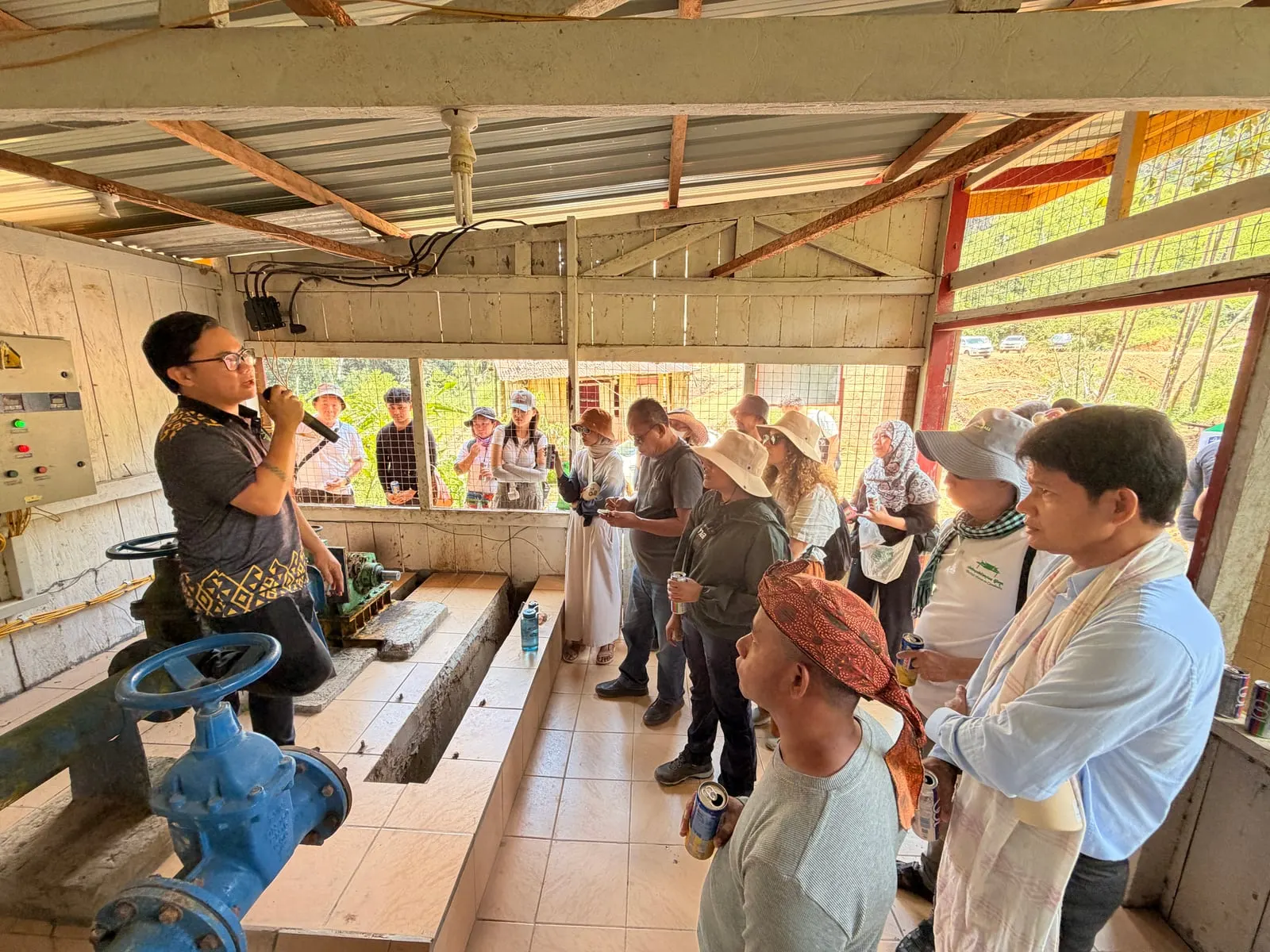
An hour later, CANSEA members enter the 20 kW Powerhouse, where the magic happens. Joe Bernard, Program Coordinator from TONIBUNG explained about the technical aspects of its operationalisation.
The community-led maintenance committee uses the tariff of RM 1 per kwh to pay for the community operator’s allowance as well as other maintenance costs. Electrification was so successful that TONIBUNG collaborated with UNDP to design and build a Hybrid Solar Food Dryer for the women’s trade of farm products such as Tuhau, the Bornean wild ginger.
Lunch was hosted at Irene’s Homestay. Over homecooked farm-to-table fares, Irene shared her story of how the taskforce opposed the construction of the Kaiduan Dam that she was part of. If it proceeded, she said, it would have displaced 9 villages and 7 generations of the native residents. It was here that members learned that land assessors and other parties made various attempts to enter Buayan Village. Through collective action, the villagers effectively barred the entry of outsiders unless permission was applied and granted by the village. Her account brings to mind Adrian’s message in his workshop; massive, utility-scale energy transition projects risks undermining local and often, indigenous communities’ rights. Who actually benefits, and who bears the cost?
Adrian drew the trip to a pointed end at the Papar River. The gushing river that faced the threat of the Kaiduan Dam construction, now powered Buayan Village. He cleverly underscored the need to protect local watersheds and forests that sustain energy systems so that remote communities that are dependent on these resources can continue to live in harmony with it.
Through a half-day excursion, TONIBUNG managed to provide a first-hand lesson on various aspects of Just Energy Transition. CANSEA members witnessed how rights-based, community-owned renewable energy systems with equitable benefit sharing can address energy access and just transition at the same time.